As African Forest Elephants increasingly move beyond the boundaries of the Mount Cameroon National Park in search of food and water, communities along the park’s West Coast Cluster are facing growing challenges from human–elephant interactions. Crop destruction, threats to livelihoods and concerns over the safety of farmers, children and other community members are placing additional pressure on coexistence between people and wildlife. In response, Voice of Nature (VoNat), in collaboration with the Mount Cameroon National Park Service and with support from the New England Biolabs Foundation, recently brought together 115 participants at the Bakingili Community Hall for a community workshop focused on elephant encounter safety, conflict prevention and nature-based solutions.
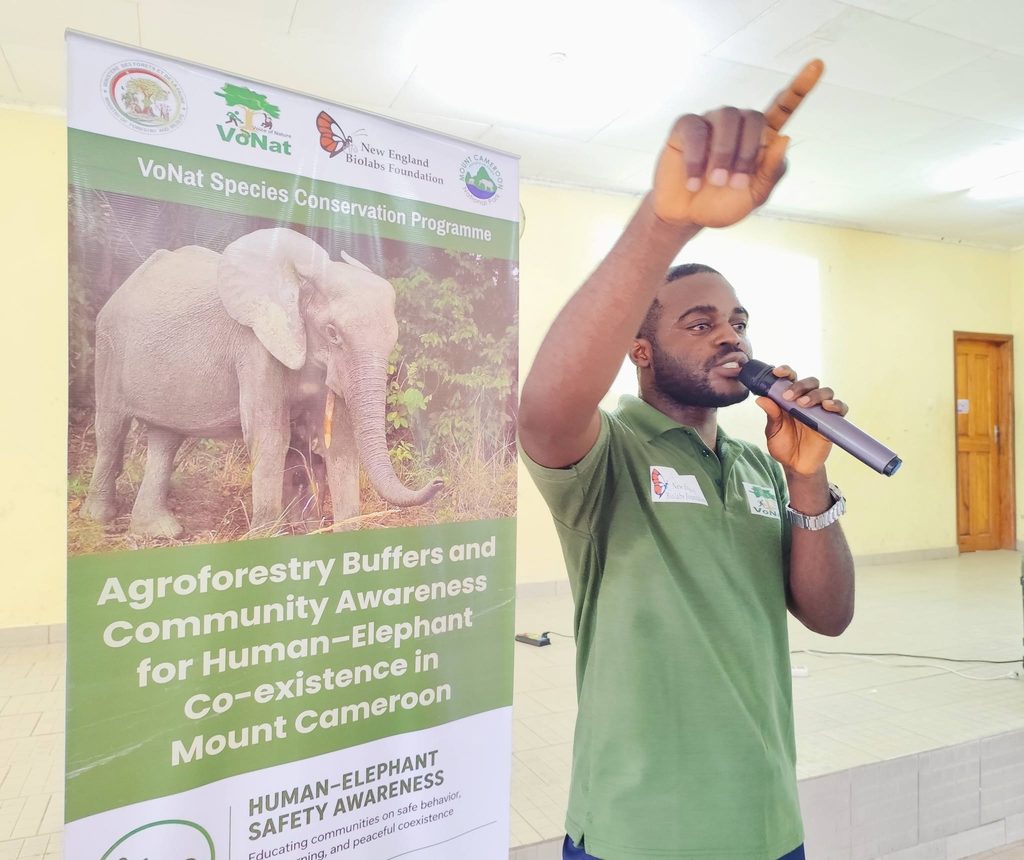
The workshop forms part of VoNat’s project, “Agroforestry Buffers and Community Awareness for Human–Elephant Co-existence in Mount Cameroon,” which promotes practical, community-led approaches to reducing human–elephant conflict while supporting the conservation of African Forest Elephants.
The workshop provided a platform for community members to combine local experience with scientific knowledge and discuss practical ways of responding to elephant encounters.
VoNat Executive Director, Ndimuh Bertrand Shancho, led a session titled “Living Safely with African Forest Elephants: Practical Do’s and Don’ts During Elephant Encounters,” focusing on behaviours and safety measures that can help community members avoid dangerous situations when elephants are encountered in farms, along roads or around settlements.
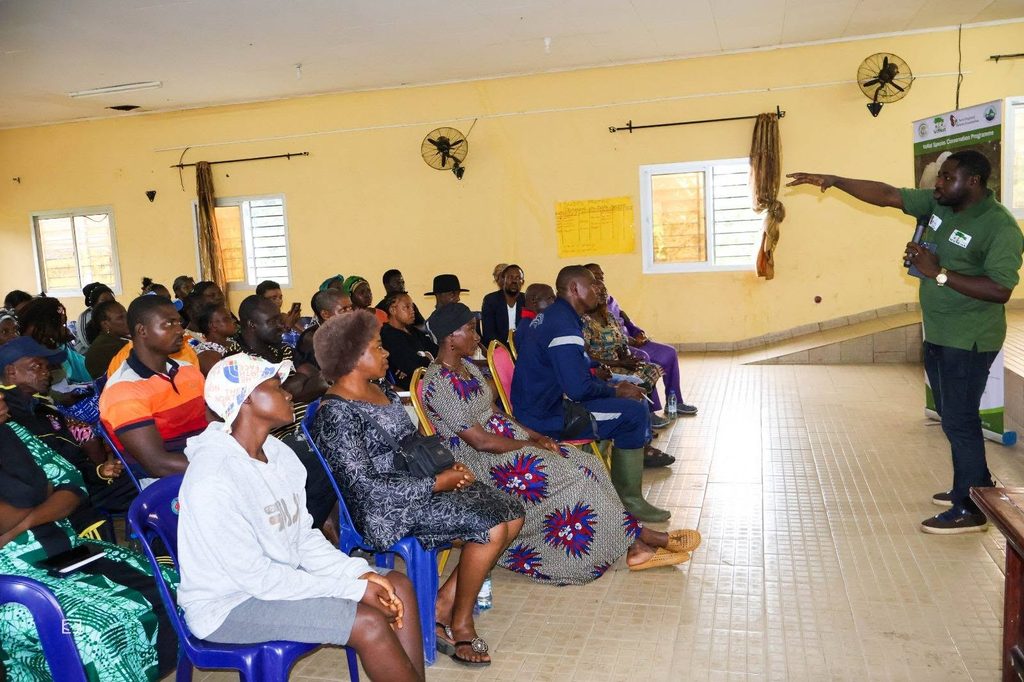
“Our goal is not simply to tell communities to live with elephants, but to equip them with the knowledge, tools and locally appropriate options they need to live safely alongside them. At the same time, we must address the underlying pressures that bring elephants and people into conflict. Community knowledge is essential in identifying where and when these interactions occur and in designing solutions that communities can own and sustain,” said Ndimuh Bertrand Shancho
A second presentation, delivered by VoNat’s Dimla Robert, explored “Biofencing for Human–Elephant Coexistence: Using Thorny Citrus, Ginger and Lemongrass to Protect Farms and Schools.”
Drawing on examples from Kenya, India, Tanzania and other countries, the presentation introduced participants to the potential of plant-based barriers to discourage elephants from entering vulnerable farms and school areas.
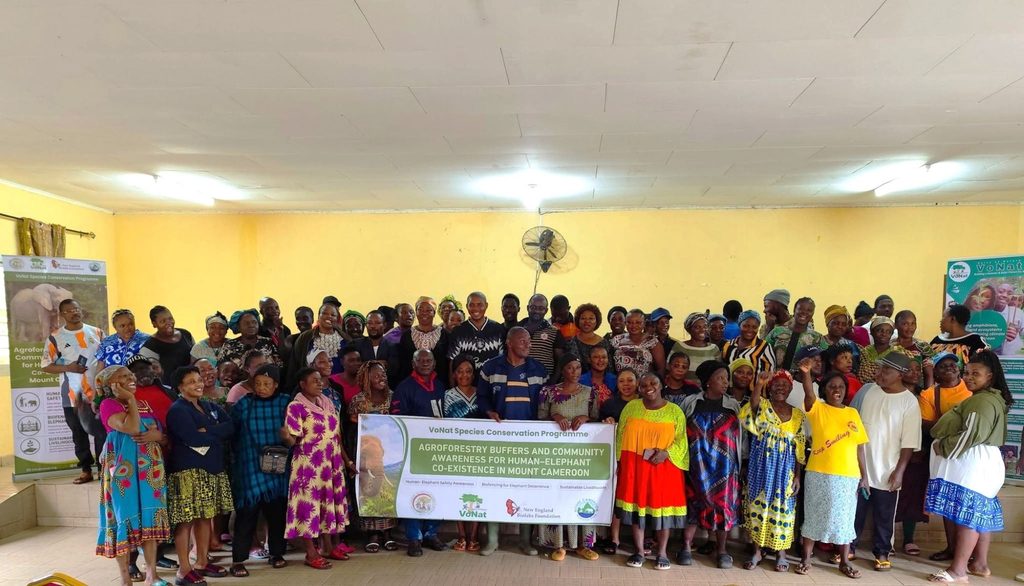
His Royal Majesty Chief of Bakingili, Elive Joseph Mokunya, who attended the workshop, welcomed the initiative while calling for continued engagement. “The workshop was very educative and I hope it will not just end today. More sensitizations are needed in this community and schools for people to learn more and have the knowledge on safety measures to avoid elephant attacks that can be deadly,” Chief Elive said.
The Conservator of Mount Cameroon National Park was represented at the event by Mr. Julien Tchamago, who appreciated VoNat for its timely intervent and pledge the Park’s support for the Initiative.
As elephant movements continue to overlap with agricultural and community spaces along the West Coast of Mount Cameroon, strengthening local capacity, improving safety knowledge and testing practical nature-based solutions will be critical to building a future where both communities and elephants can thrive.