
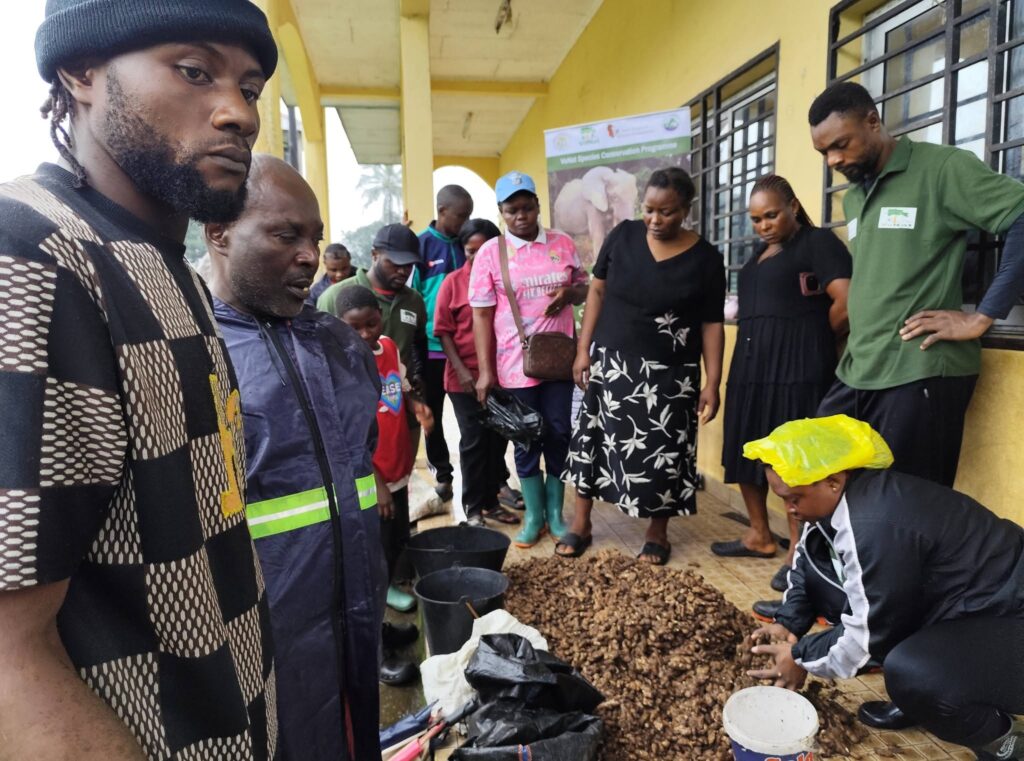
Voice of Nature (VoNat), in collaboration with the Mount Cameroon National Park Service and with support from the New England Biolabs Foundation (NEBF), is engaging more than 15 farmers in the West Coast Cluster of Mount Cameroon National Park in a pilot elephant-smart farming initiative aimed at reducing crop losses caused by African forest elephants (Loxodonta cyclotis).
As part of the initiative, farmers received ginger and citrus seedlings to establish trial plots and assess whether these crops can provide practical alternatives in areas frequently affected by elephant crop-raiding. The approach seeks to reduce losses while creating additional food and income opportunities for farming households.
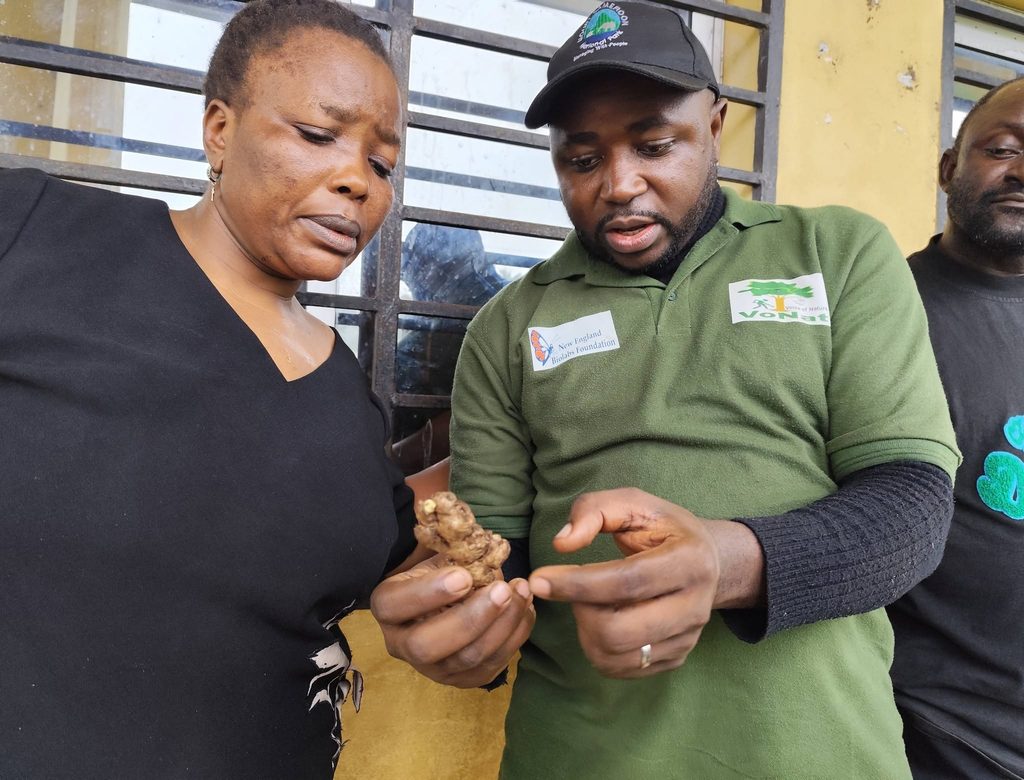
For farmers like Besingi Johnson of Bakingili, the need is urgent. In 2020, he estimated losing about 30,000 plantings on his 10-hectare farm to elephants, representing a loss of approximately FCFA 7.8 million.
“My loss was about 7.8 million FCFA. It happened after I had invested heavily in labour and inputs. I struggled with loans and it took me years to recover,” he said.
Besingi welcomed the pilot but noted that farmers managing larger farms also need support with costly protective measures such as barriers and barbed wire. He hopes the new crops can both discourage elephants and provide products farmers can sell.
“I hope these new crops will discourage elephants and also give us products we can sell so we can go back to farming,” he said.
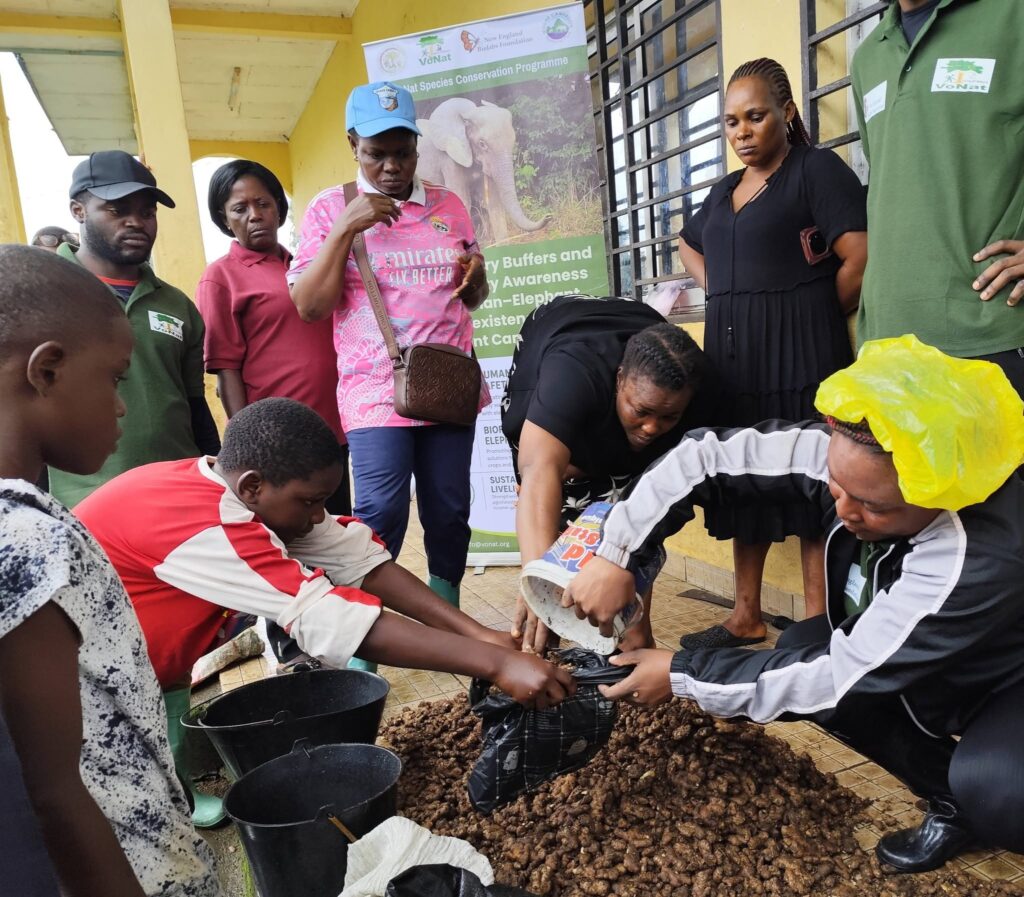
For other participating farmers, the initiative represents an opportunity to rebuild agricultural activity. Malatia Jerome described the seedling donation as a long-standing need and pledged to care for the plants with the same commitment that went into securing them.
Asumthaline Elonge also sees potential in ginger as both a food and income-generating crop. She plans to reclaim overgrown farmland and establish ginger plots, demonstrating how the initiative could contribute to restoring productive use of abandoned agricultural areas.
The pilot draws on experiences from elephant-affected farming landscapes in countries including Kenya, Tanzania and India, while testing their relevance under local conditions on Mount Cameroon. Farmers’ experiences will help assess crop acceptance, performance and potential contribution to reducing human-elephant conflict.