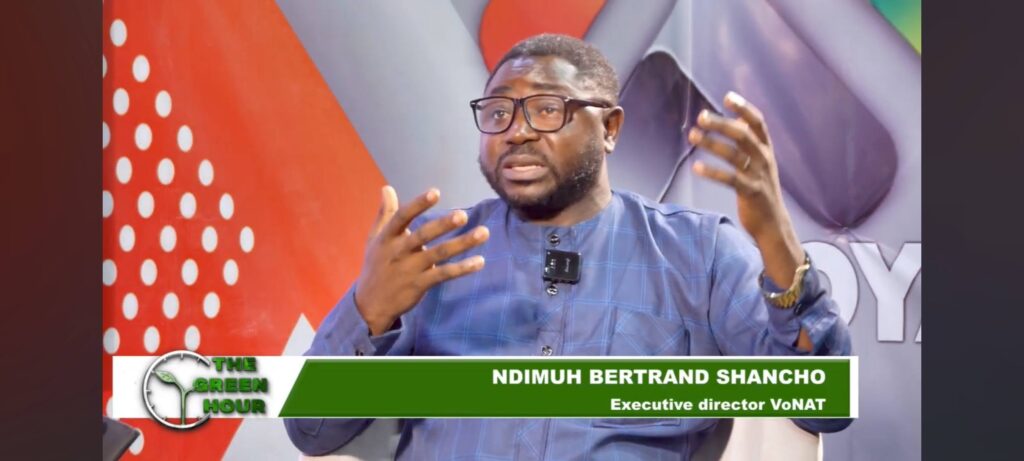
“Every wetland lost is a loss of biodiversity, especially amphibians, clean water, and livelihoods for our communities,” said Ndimuh Bertrand Shancho, Executive Director of Voice of Nature (VoNat), during a recent appearance on The Green Hour, Royal TV’s flagship environmental programme. Speaking under the theme “Ecosystem Restoration: Restoring Nature, Securing Our Future,” Ndimuh called for urgent action to restore Cameroon’s degraded ecosystems and strengthen environmental protection.
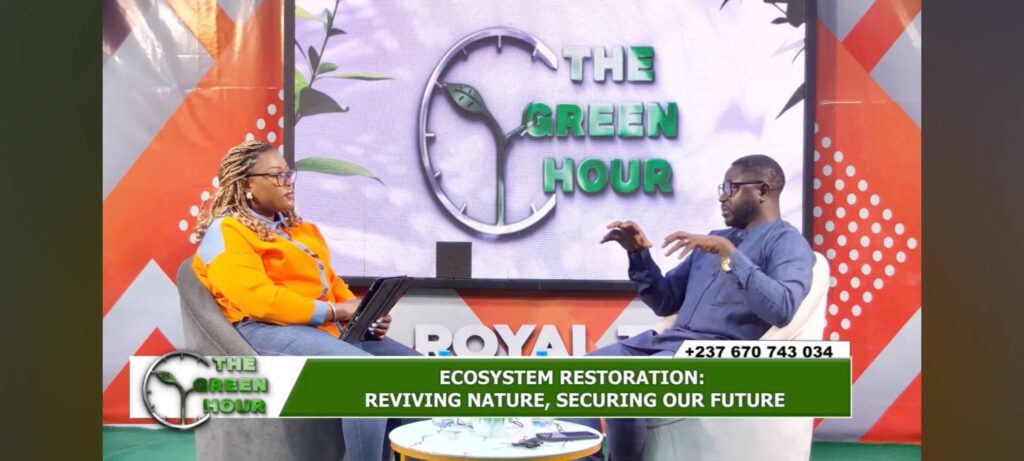
During the programme, Ndimuh explained that ecosystem restoration extends beyond tree planting. It involves restoring degraded forests, wetlands, rivers, mangroves, and watersheds so they can continue providing clean water, fertile soils, biodiversity, climate regulation, and sustainable livelihoods. He identified the Mount Cameroon Landscape and the Tiko-Limbe mangrove ecosystem among Cameroon’s priority restoration areas, warning that deforestation, illegal logging, wetland encroachment, pollution, bushfires, unsustainable farming, and climate change are placing these ecosystems under increasing pressure.
Ndimuh noted that environmental degradation is already affecting communities through declining water supplies, reduced agricultural productivity, flooding, biodiversity loss, and threats to livelihoods. He called for stronger enforcement of Cameroon’s 1996 Environmental Management Law, particularly its provisions protecting wetlands and other sensitive ecosystems.
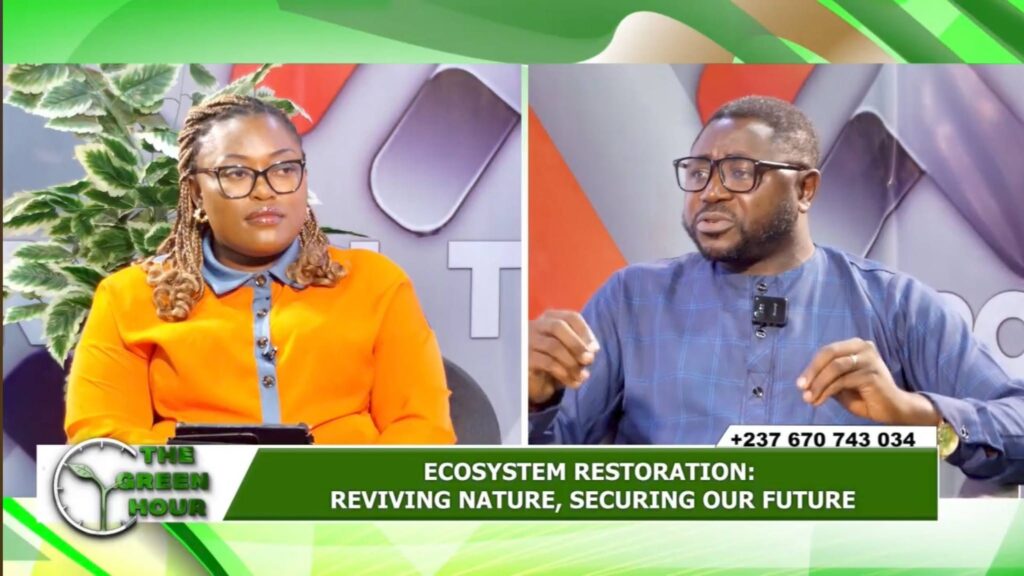
Highlighting VoNat’s work, Ndimuh shared the organization’s efforts to establish indigenous tree nurseries, restore degraded habitats and riverbanks, train young conservationists in ecosystem monitoring, and promote community-led restoration initiatives. He emphasized that ecosystem restoration also creates green jobs in tree nursery development, habitat restoration, biodiversity monitoring, sustainable agriculture, and environmental education.
Concluding the interview, Ndimuh encouraged every citizen to contribute by protecting forests and wetlands, planting indigenous trees, preventing pollution, and supporting community conservation efforts. “Every tree we protect and every ecosystem we restore is an investment in our children’s future,” he said.
Watch the full interview here:https://youtu.be/1aC4RvIDR_8?si=DzQZP7TS53MzK4PE