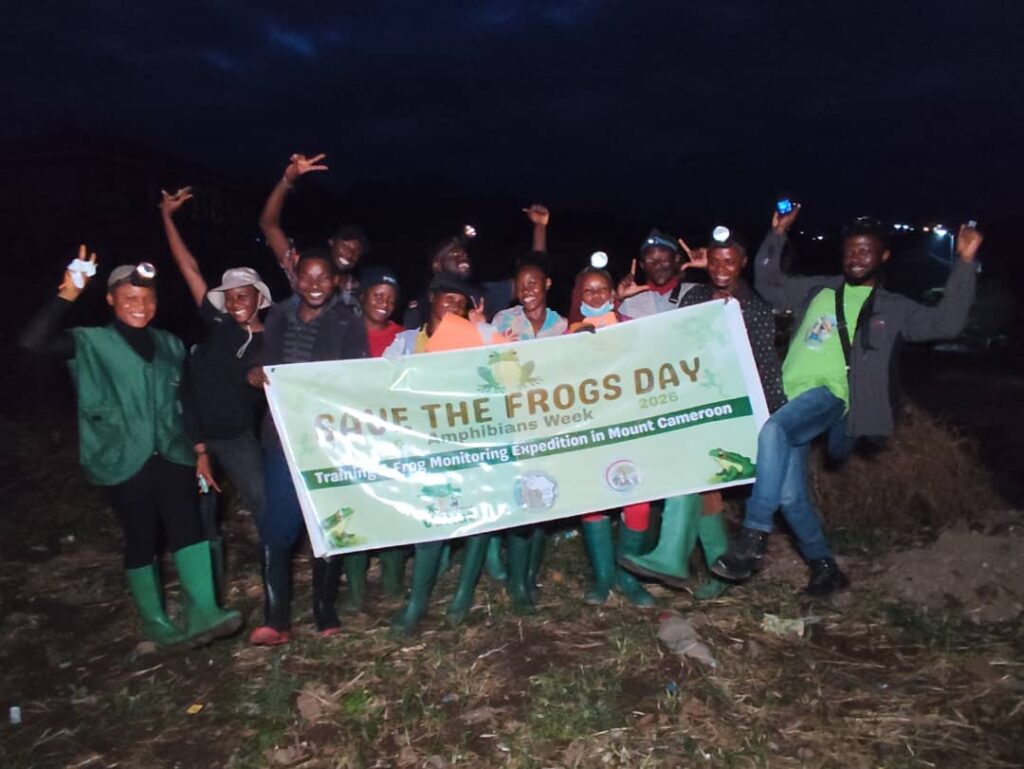
For many of the young people who took part in Voice of Nature’s (VoNat) Pilot Amphibian Survey in the Mount Cameroon Landscape, the experience was far more than a field exercise; it was their first encounter with scientific research and a transformative journey into biodiversity conservation. Conducted between 28 April and 8 May 2026, the survey equipped staff members and young volunteers with practical skills in amphibian monitoring before taking them into the wetlands and forests of the Mount Cameroon Landscape. For most participants, it was their first time conducting night surveys, identifying amphibians, and contributing to scientific research.
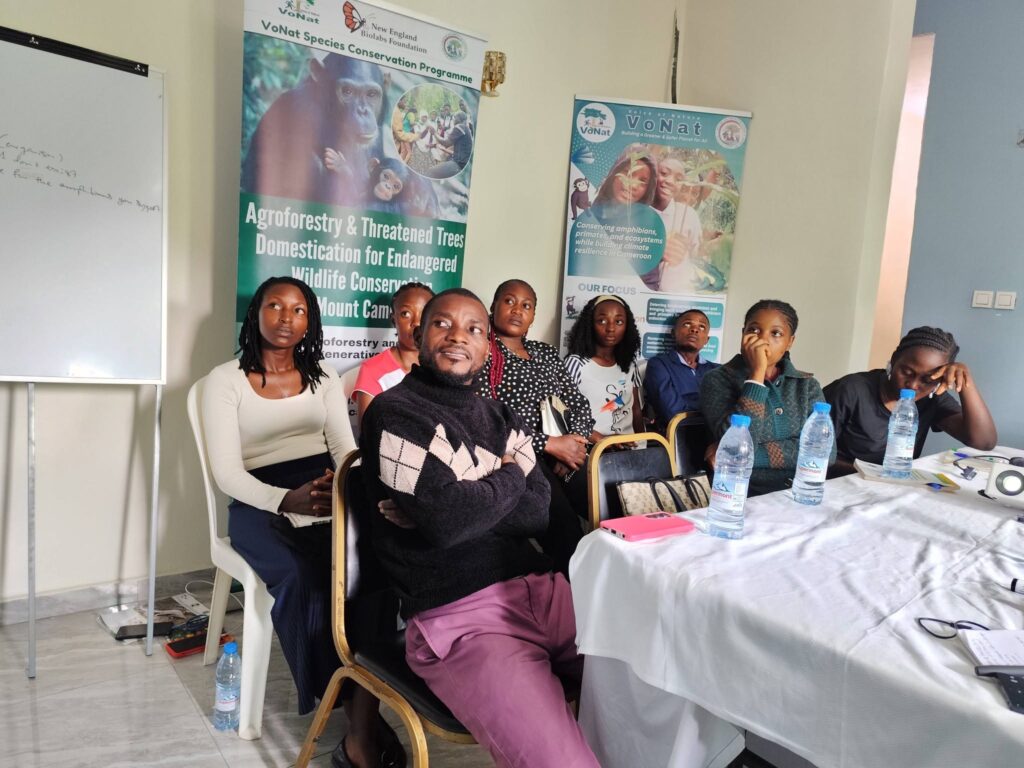
“I never imagined I would go out at night looking for frogs. I saw beautifully coloured frogs and visited important wetlands like the Bonduma Water Catchment. It was an eye-opening experience,” recalled Abienwi Charity, an undergraduate Forestry and Wildlife student at the University of Buea.
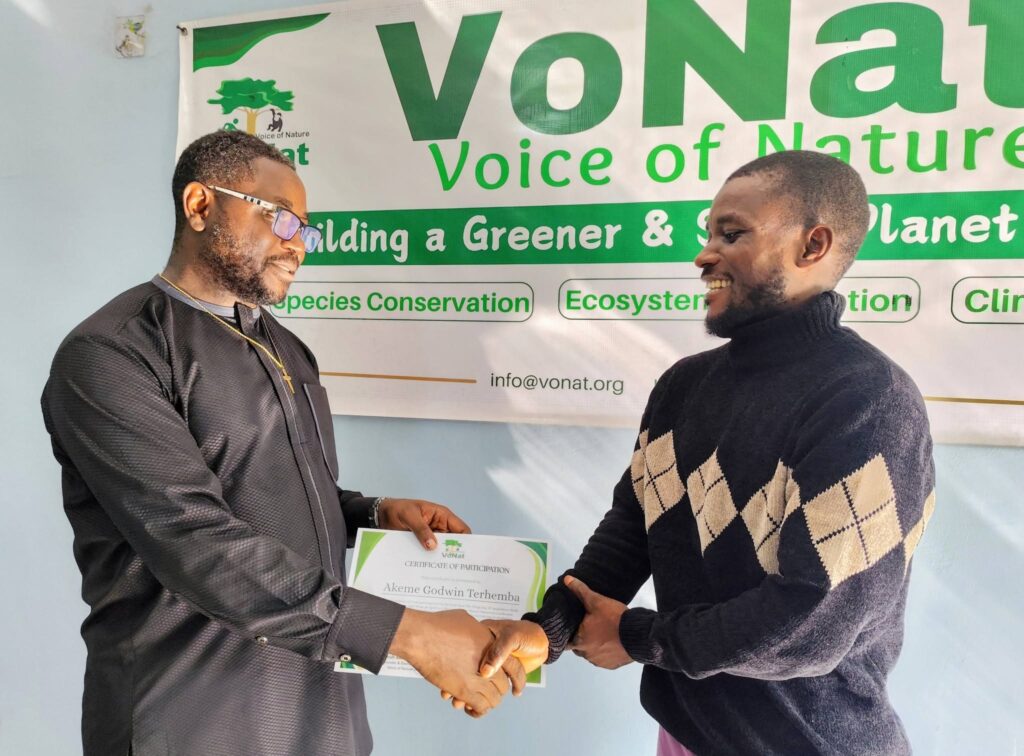
For Akeme Godwin, a final-year Wildlife Resource Management student at the University of Bamenda, the programme offered both personal and professional growth. “I gained practical field skills, learned about different frog species, and added valuable experience to my CV,” he said.
The survey also challenged participants to develop patience, teamwork, and keen observation skills. Jabi Chale, a National Geographic Young Explorer and documentary filmmaker, admitted that locating frogs was difficult at first. “With guidance from my team leader, I gradually learned the skills and was able to find and identify many frogs. It was a great learning experience,” he said.
Beyond building technical skills, the programme transformed participants’ understanding of amphibians and their role in maintaining healthy ecosystems. Jam Vanessa, an undergraduate Forestry and Wildlife student at the University of Buea, said that before joining the survey, she knew little about the ecological importance of frogs. Today, she feels empowered to educate others about their vital role in nature and the need to protect them.
For Ossang Blessing, the survey was an opportunity to contribute directly to conservation while witnessing the extraordinary biodiversity of the Mount Cameroon Landscape firsthand. Recording endemic species such as the Buea Egg Frog (Leptodactylodon bueanus), the Bangwa Reed Frog (Hyperolius bangwae), and the threatened Decorated Running Frog (Kassina decorata) deepened her appreciation of the landscape’s global conservation significance. Reflecting on the experience, she remarked, “Conserving frogs means conserving our ecosystems and securing a healthier environment for future generations.”
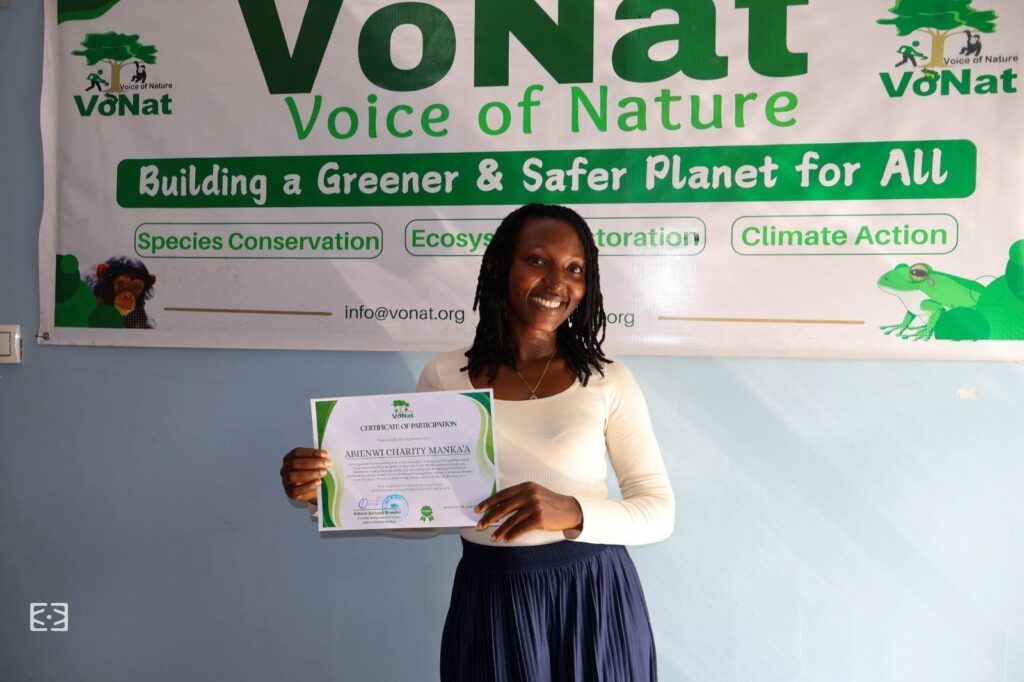
These experiences exemplify VoNat’s commitment to nurturing the next generation of conservation leaders. By combining hands-on scientific training with community engagement, the organization is equipping young people with the knowledge, skills, and confidence to become citizen scientists and environmental ambassadors. Through initiatives like the Pilot Amphibian Survey, VoNat is not only generating valuable scientific data but also inspiring a new generation to champion biodiversity conservation and safeguard the unique ecosystems of the Mount Cameroon Landscape.
By Ndimuh Bertrand Shancho