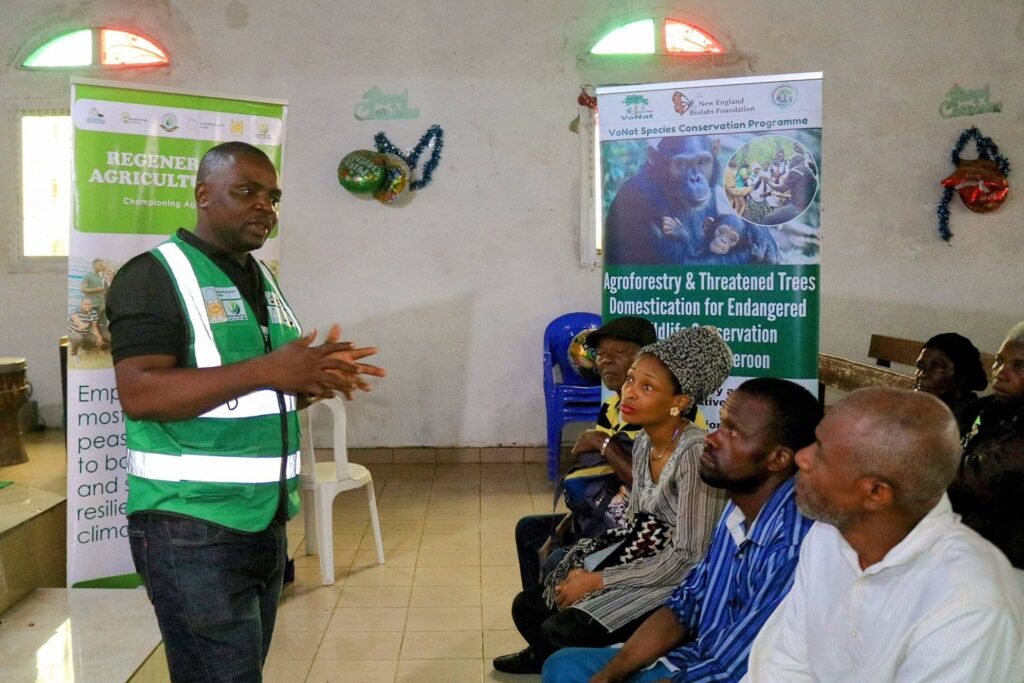
Voice of Nature (VoNat), in partnership with the Regenerative Agriculture Hub of Nkwa4Change Solutions, has successfully trained nearly 50 smallholder farmers from Bonakanda and surrounding villages in regenerative agriculture and agroforestry. The training, which took place recently in Bonakanda, combined theoretical learning with hands-on practice, equipping farmers with sustainable methods that enhance productivity while protecting the environment.
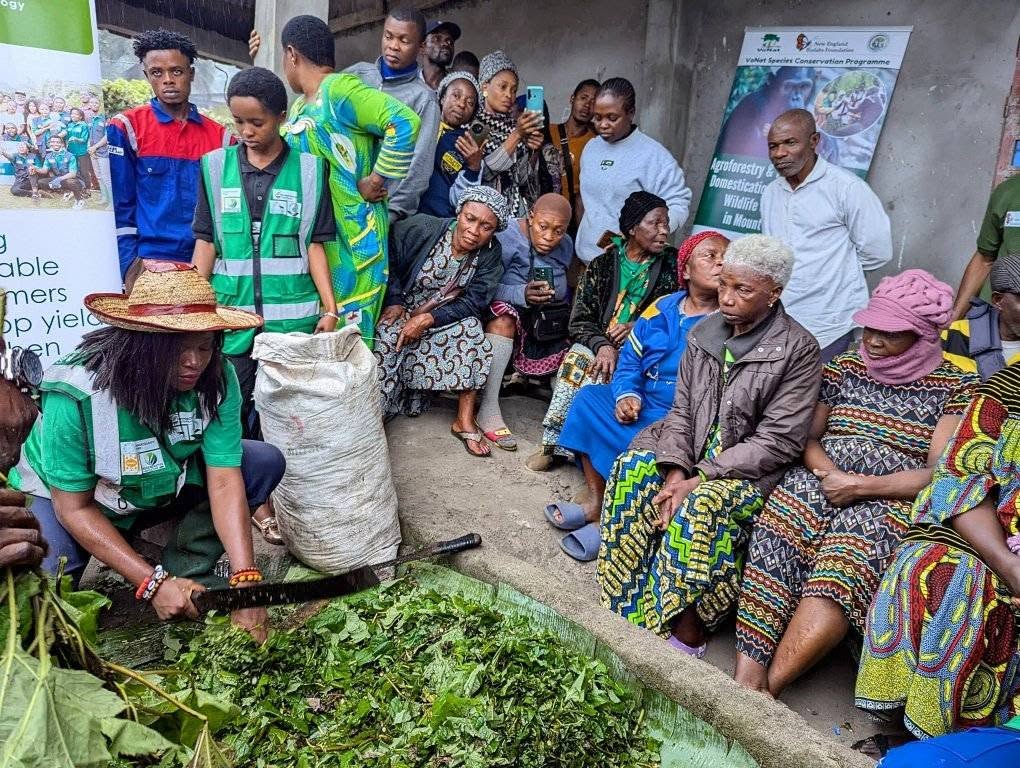
A highlight of the session was the practical demonstration on producing organic fertilizers using readily available materials such as animal droppings, wood ash, and sunflower. Supported by the New England Biolabs Foundation, the program provides communities with viable alternatives to forest encroachment, thereby reducing pressure on Mount Cameroon National Park (MCNP).
This training represents the second phase of the initiative. The first phase, held on June 4 in Bwitingi, brought together farmers from Bwitingi, Bokova, and CEAC. Together, these sessions are fostering a growing network of farmers who are not only adopting sustainable agricultural practices but also becoming active custodians of the rich biodiversity surrounding Mount Cameroon.
Farmers who participated in the training expressed excitement and gratitude. “It is my first time to see such training. I am so happy because it will help us rely less on synthetic fertilizers that affect our health. I had once been hospitalized after consuming vegetables grown with synthetic fertilizers, so now I am determined to produce organic crops and teach others in my community,” Elizabeth Mbua shared,
Tikum Kenneth, a tomato farmer, said: “I used to get discouraged by poor yields from synthetic fertilizers, and almost stopped farming. But through this training, I learned that natural materials I used to throw away are actually very important. I am eager to put these methods into practice and hope to become a testimony to others.”
John Ngale added that deforestation is a big problem in Bonakanda, and firewood has become scarce. “Thanks to this training, we now know how to farm productively while preserving trees, so we can have both food and firewood,” he added
These testimonies highlight the transformative impact of the program, as farmers embrace sustainable practices that improve livelihoods while conserving the environment.