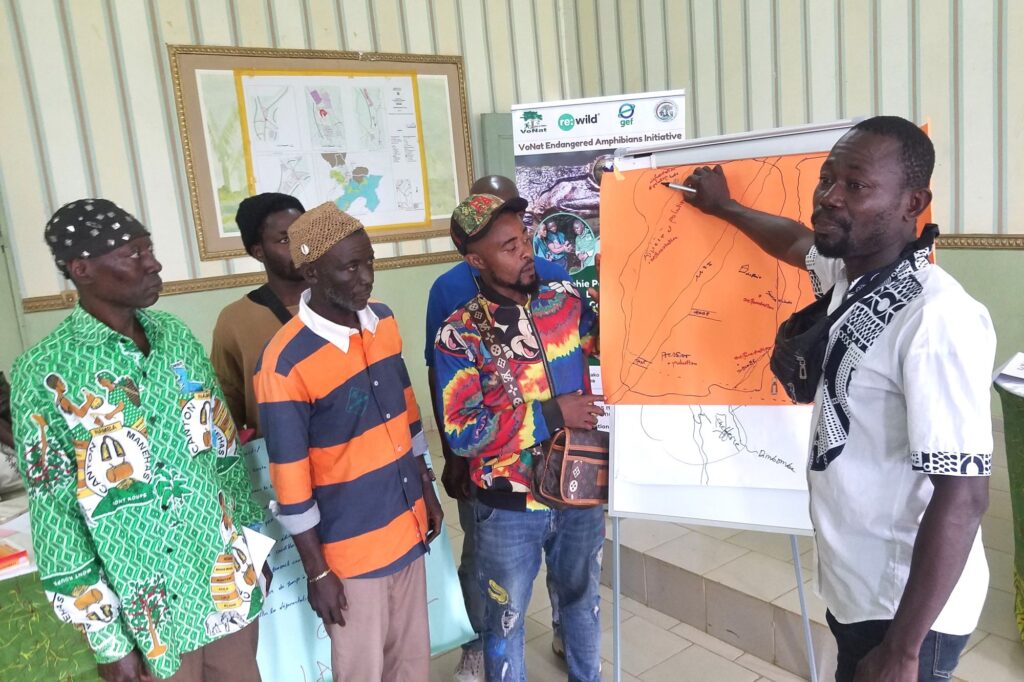
In a major step toward community-driven conservation of amphibians, Voice of Nature (VoNat) recently convened close to 50 traditional leaders, frog hunters, youths, and community members from 15 villages around Mount Nlonako for a participatory workshop at the Ebone Council Hall. The session focused on identifying and mapping local solutions for protecting the world’s largest frog, the Goliath frog ( Conraua goliath), a species found only in Cameroon and Equatorial Guinea.
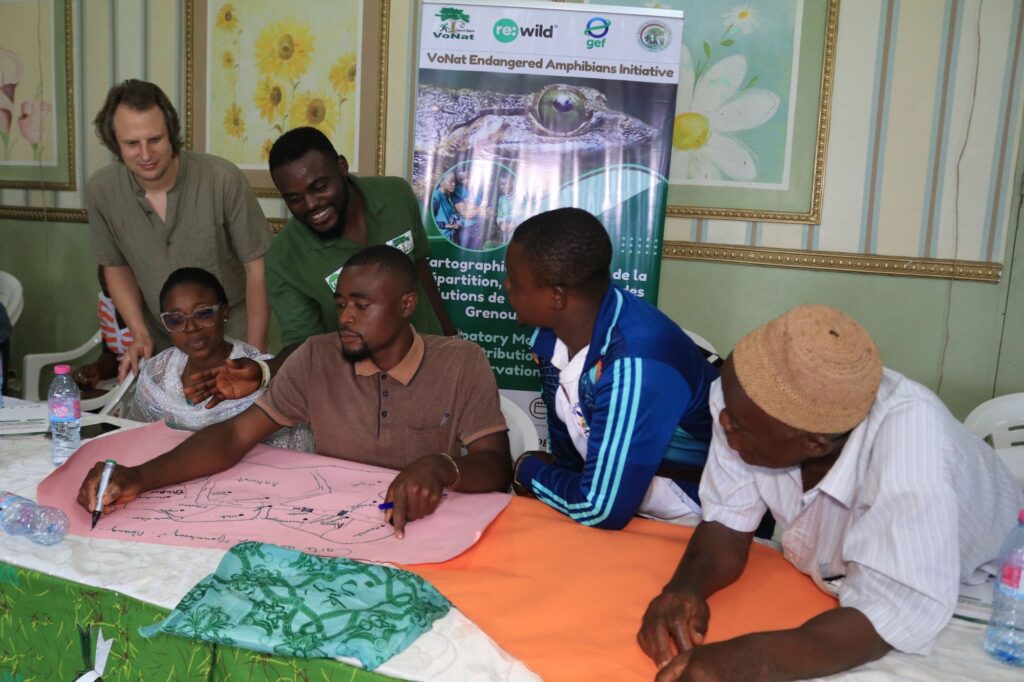
Supported by Re:wild and the Global Environment Facility (GEF), the event brought together representatives of the Divisional Officers of Manjo and Nlonako, Mayors, Forestry officials, and traditional authorities, marking a vital step in connecting local knowledge with scientific and policy efforts.
Presenting results from VoNat’s ecological and threat mapping work from April–August 2025, VoNat’s Executive Director, Ndimuh B. Shancho, underscored the importance of translating findings into concrete, community-led action. “This process is about giving voice and leadership to the people who live closest to these species. Conservation cannot succeed if it excludes communities, it must be built with them, for them, and by them,” he stated.
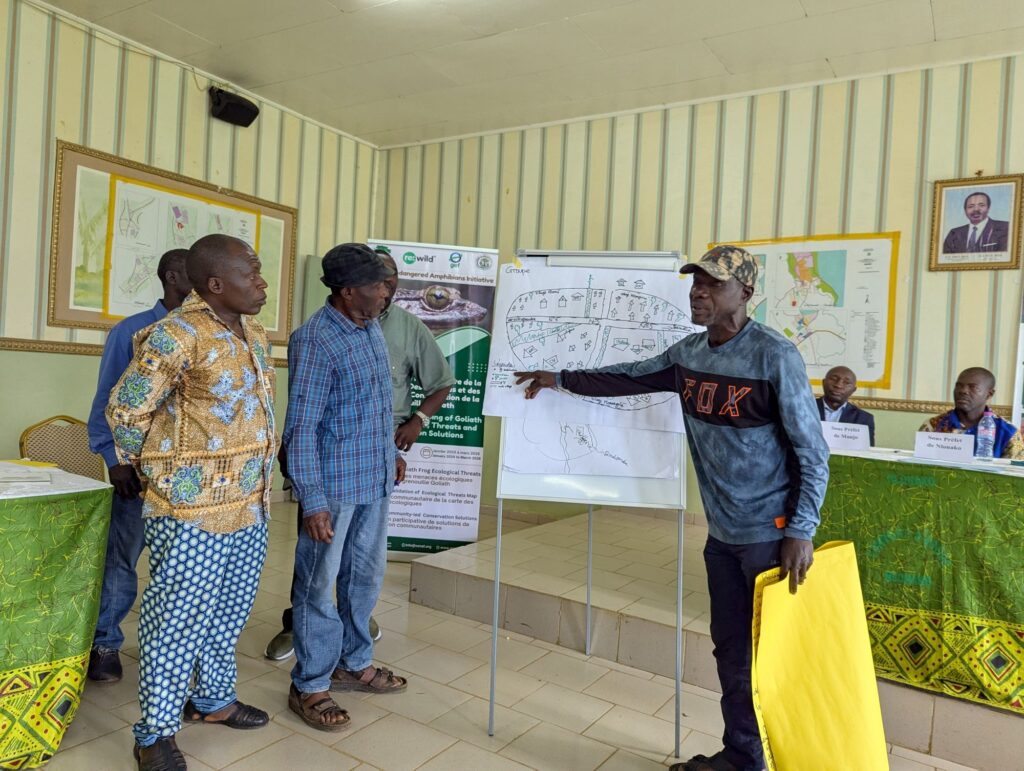
During focus group discussions, community leaders, youths, frog hunters, and local administrators reflected on the major threats facing the Goliath frog and presented practical conservation solutions to mitigate them. The dialogue fostered a shared understanding of how traditional knowledge and local stewardship can strengthen conservation outcomes in the Mount Nlonako area.
Community representatives expressed deep appreciation and optimism. “We expect that the conservation solutions suggested here will be realized and that eco-tourism will be developed in Ebone. It is our communities that will truly benefit from this initiative, not VoNat,” Njoume Ebehezert Theophile, a notable from Ntolo, noted.
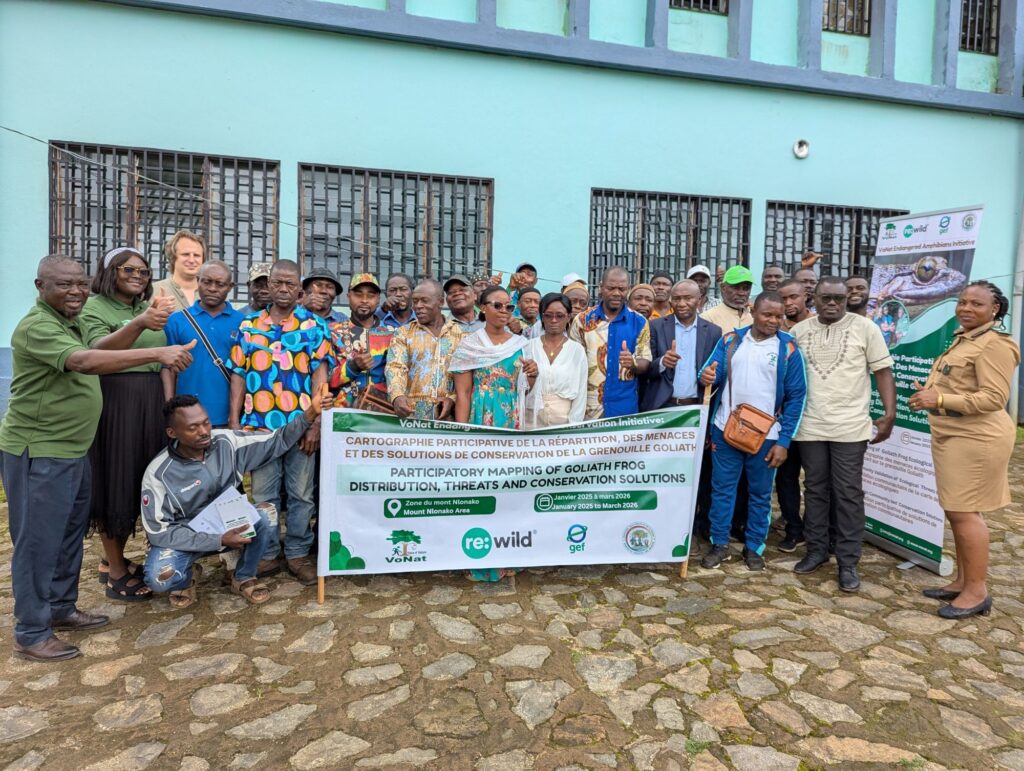
The Chief of the Forestry and Wildlife Control Post in Nlonako, Ngemoh Stella, on her part, commended the community-centred conservation approach of VoNat. “The workshop taught us a lot about the giant frogs and the threats they face. Bringing together community members, some of whom contribute to these threats, to brainstorm and suggest solutions was an excellent approach. Implementing these strategies will go a long way to conserve the frogs and their natural habitat,” she said.
The participatory workshop will inform the creation of a Community-Led Goliath Frog Conservation Action Plan, a locally driven roadmap for amphibian conservation in the Mount Nlonako landscape. By placing communities at the heart of conservation, VoNat is redefining what effective biodiversity protection looks like, rooted in local knowledge, shared responsibility, and hope for future generations.