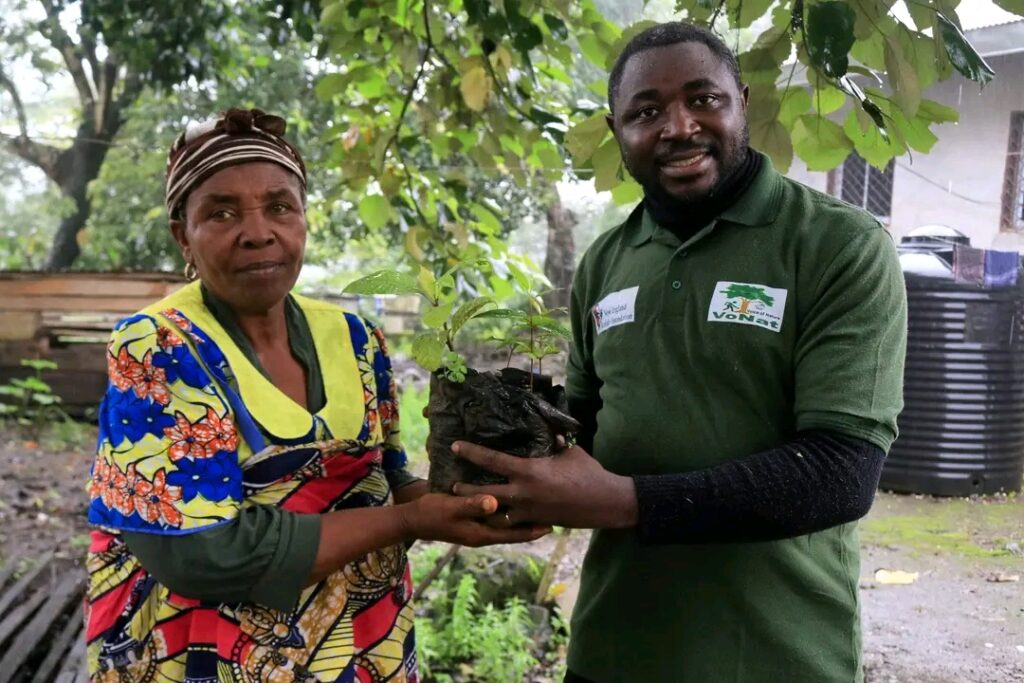
Voice of Nature (VoNat) is engaging communities adjacent to Mount Cameroon National Park in Cameroon to domesticate threatened tree species, aiming to reduce overexploitation and promote long-term conservation. On July 24, VoNat distributed hundreds of seedlings of valuable but increasingly threatened trees, such as Mahogany and Prunus Africana, to nearly 50 households, including youth groups, women, and community leaders across Bwitingi, CEAC, and Bokova. Alongside the donations, the beneficiaries were educated on the ecological, medicinal, and economic importance of each species and trained on how to continue raising and domesticating these trees sustainably.
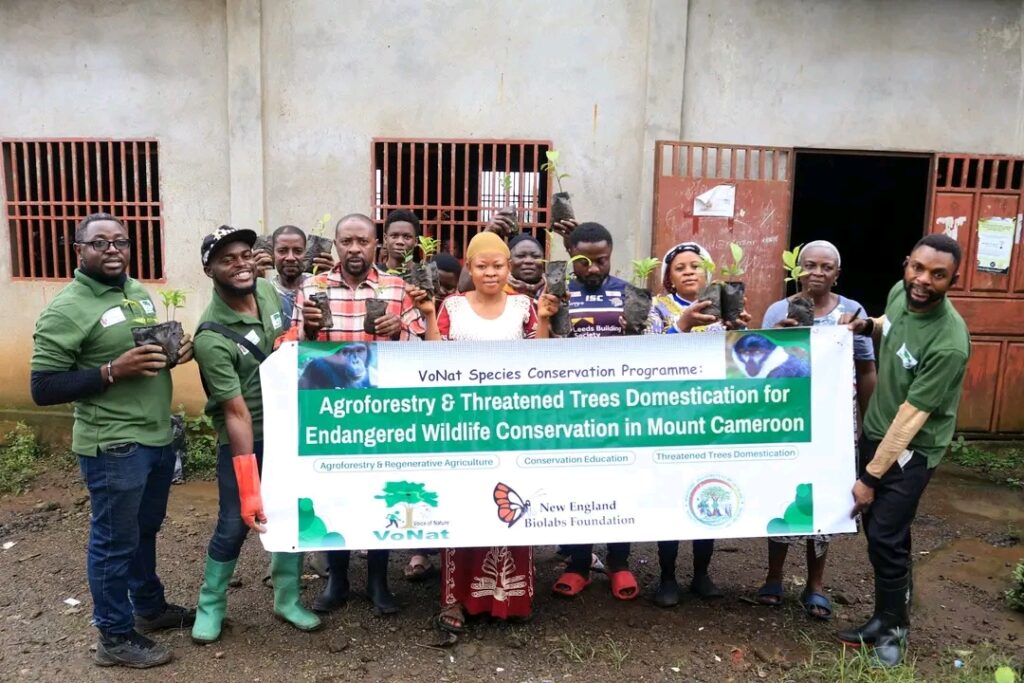
These species have been heavily exploited for furniture wood and traditional medicine, causing severe depletion within the natural forests of the national park. VoNat’s domestication initiative aims to ease this pressure by enabling communities to grow these trees on their farms and homes, thus securing the long-term survival of these species outside protected areas.
This approach is already delivering tangible benefits for local people. Pa Makoko Aluis, one of the beneficiaries, shared how the new trees will reduce his need to travel deep into the forest for fuelwood, saving time and protecting the environment. “With these new trees, I can plant them near my home and will not need to go far anymore,” he said.
Similarly, farmer Fusi Caius emphasized the medicinal value of Prunus africana, sharing his plan to use its leaves to make health-promoting teas for daily use. Another community member, Akama Raphael, highlighted the importance of these trees in maintaining ecological balance amid growing settlement expansion in Bwitingi, expressing gratitude for VoNat’s support in integrating reforestation into farms and home compounds.
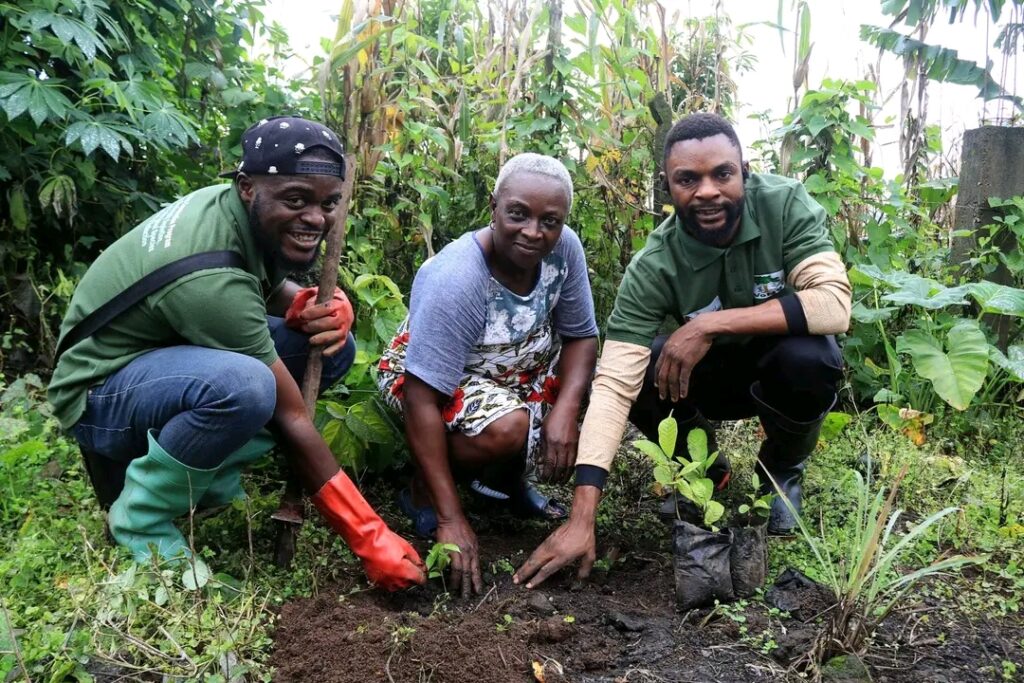
Ndimuh Bertrand Shancho, Executive Director of VoNat, explained that this initiative empowers communities to conserve biodiversity while improving livelihoods. “By encouraging farmers to domesticate these threatened species, we help reduce dependency on wild forests, protect these species from extinction, and generate sustainable resources,” he said.
The initiative forms part of a broader conservation campaign supported by the New England Biolabs Foundation, which plans to expand the project to other forest-adjacent communities, including Bonakanda and Bova, in the coming weeks. To ensure sustainability and lasting impact, VoNat has established a follow-up mechanism to monitor the growth and care of the seedlings within beneficiary communities.
Jabi Katy Chale