When Madam Taba Grace of Bonakanda village in South West Cameroon received threatened tree seedlings from Voice of Nature (VoNat), she saw more than plants. In her hands were medicine, resilience, and the promise of a future where her community no longer depends on the rapidly depleting Mount Cameroon forest. Through her eyes, the domestication of Mount Cameroon’s threatened trees is not an abstract conservation goal, it is health, security, and hope.
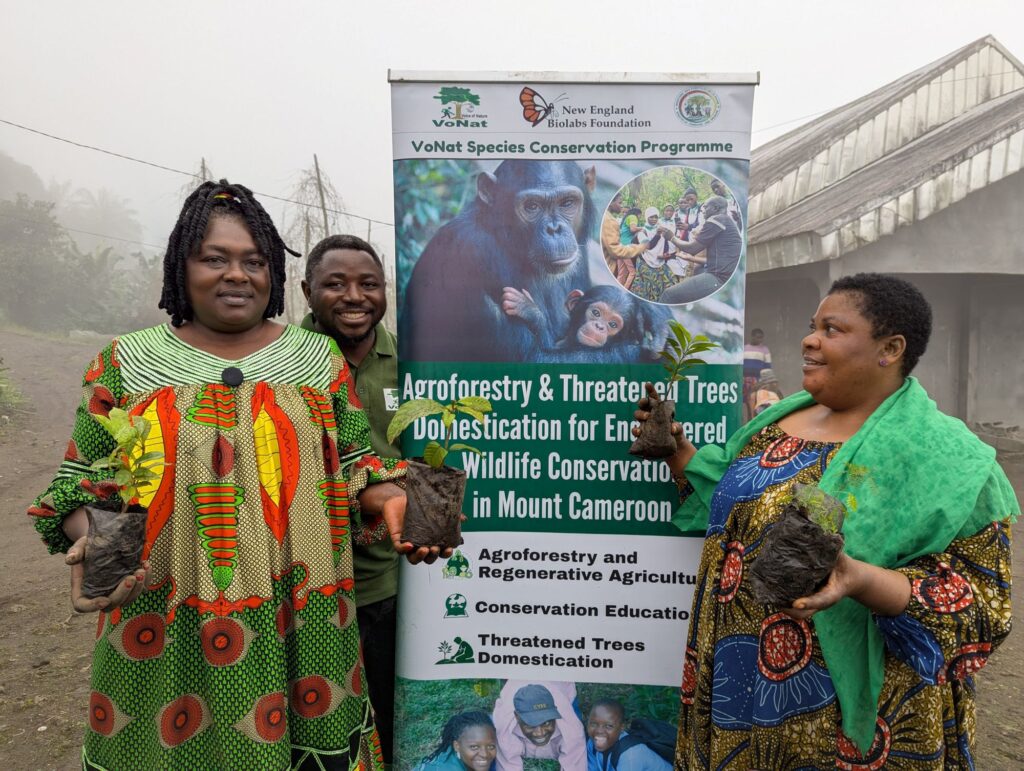
Bonakanda borders Mount Cameroon National Park, a 58,154-hectare IUCN Category II protected area and one of Africa’s most important biodiversity hotspots. The park shelters endangered species such as the Nigeria-Cameroon chimpanzee, African forest elephant, and Mount Cameroon francolin. Yet this rich biodiversity faces immense pressure from agricultural expansion, fuelwood harvesting, and the overexploitation of high-value trees like Prunus africana and African mahogany ( Khaya spp.).
For Madam Grace, these trees have always been part of her household pharmacy and livelihood system, and their disappearance has been deeply felt. Holding her Prunus africana seedlings, she reconnects with remedies she has relied on for decades. “ This plant treats many illnesses, fever, stomach ache, so many things. If you have it at home, you don’t need to run to the forest. You just boil the leaves or bark and drink, even use it like tea ,” she shares.
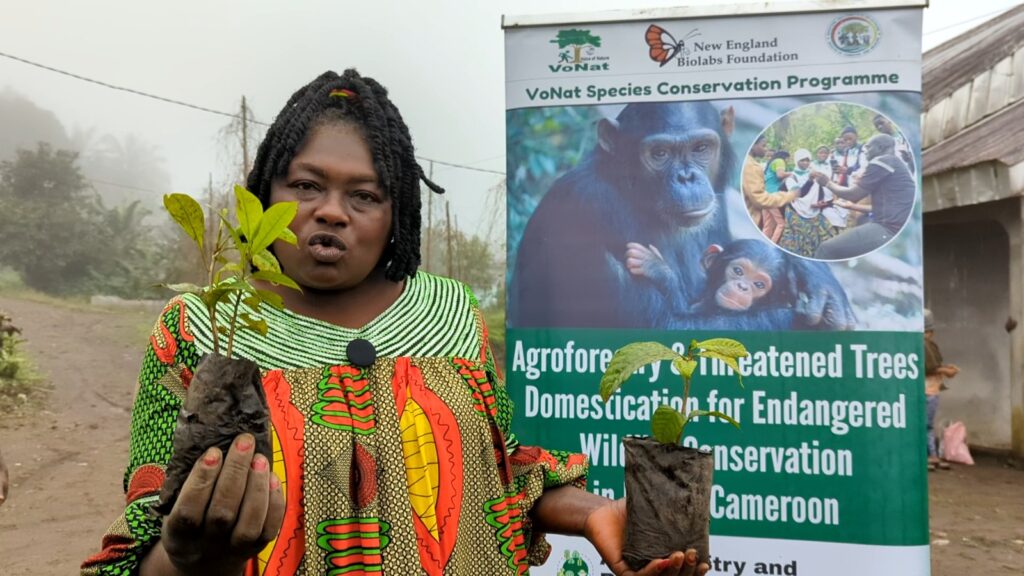
Her mahogany seedling speaks to another equally urgent need. “ Mahogany is almost finished. People cut it for beds and chairs. If we plant it in our farms, we will stop going into the forest to look for the few that remain. We may not benefit now, but in 25 years our children will use it to build their houses without buying planks ,” she explains.
Through Madam Grace’s voice, the meaning of tree domestication becomes unmistakably clear. These seedlings are medicine today, economic security tomorrow, and a natural shield for an endangered forest struggling to survive.
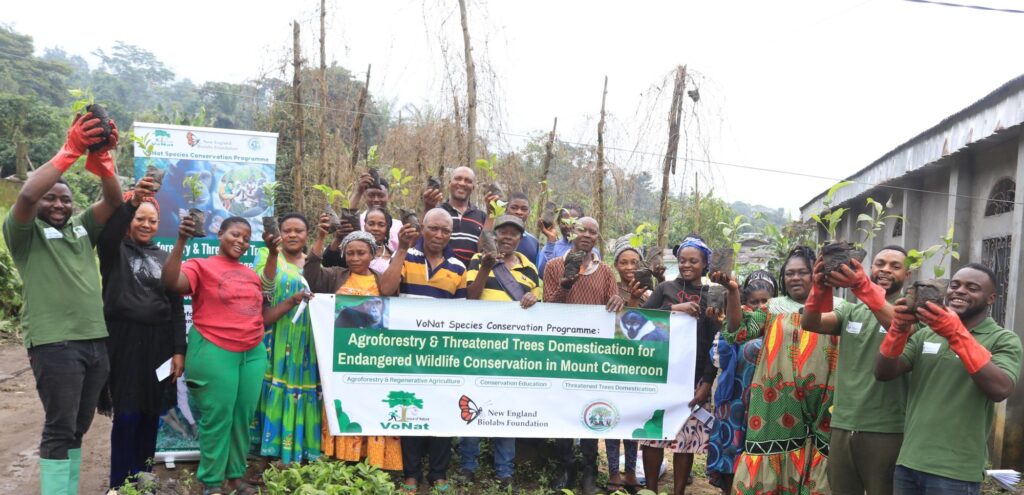
By supporting communities like Bonakanda to cultivate threatened tree species, VoNat is reducing harvesting pressure inside Mount Cameroon National Park and restoring these species on farms, home gardens, and communal lands. In doing so, VoNat is not only advancing biodiversity recovery, it is empowering communities to manage natural resources sustainably while strengthening intergenerational knowledge and stewardship.
With support from the New England Biolabs Foundation , VoNat is mentoring and engaging local residents in threatened-tree domestication, conservation education, and actions that help deter wildlife and habitat depletion. Through these efforts, conservation and community livelihoods are proving that they can thrive hand in hand.
By Ndimuh Bertrand Shancho