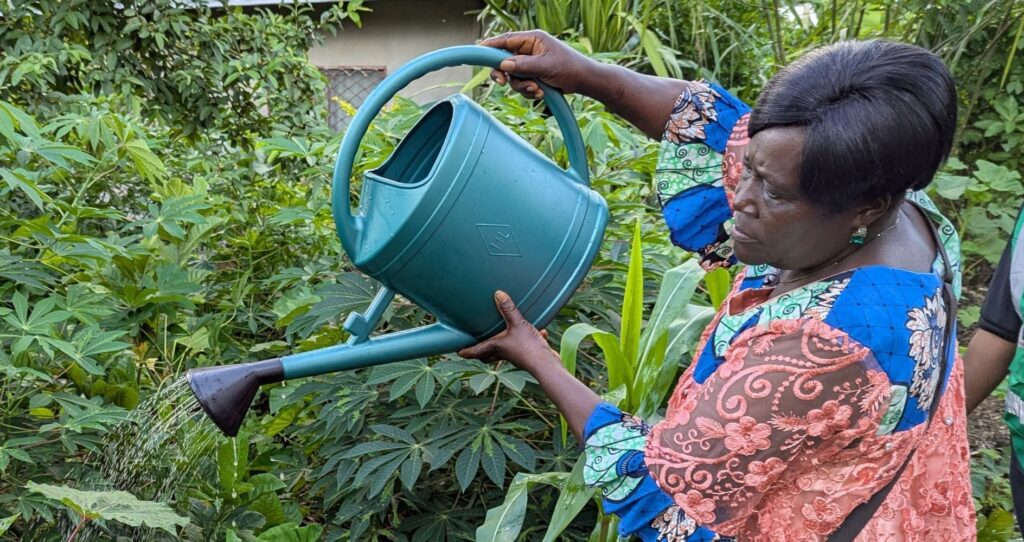
Farmers in Bwitingi, Bwiteva, and Bokova villages in the Mount Cameroon Area are already seeing greener vegetables, healthier okra, and improved soil quality just weeks after adopting the regenerative agriculture system introduced by Voice of Nature (VoNat) and the Regenerative Agriculture Hub of Nkwa4Change Solutions.
The early results come as part of VoNat’s ongoing effort to improve soil fertility and food security in the Mount Cameroon Area through Eco-friendly farming methods while discouraging unsustainable agricultural practices that threaten the biodiversity of the Mount Cameroon National Park. Following a June 4, 2025, training on regenerative agriculture and agroforestry, VoNat conducted follow-up visits to evaluate the impact of the training, guide farmers in proper fertiliser application, and help them produce their own eco-friendly inputs.
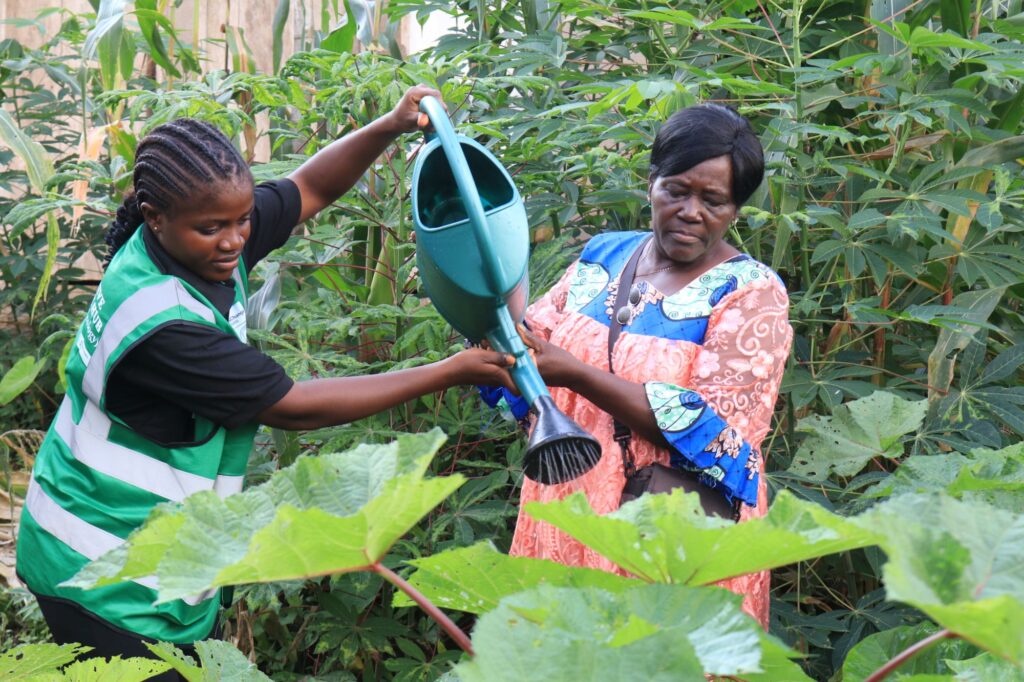
“These follow-up visits are crucial for measuring the real-world benefits of the training, gathering farmer feedback, and strengthening our collaborative approach to regenerative agriculture,” explained Clifford Chia, team lead for the field visits.
A Bwitingi-based farmer, Madame Melissa pointed to visible changes in her crops. “For this short time, I have noticed improvements in the sections where I applied the fertiliser. I really want to learn how to make it myself so I don’t have to depend on others,” she said.
Another Field team member, Ndimla Robert, also reported clear differences. “We noticed that vegetables and okra in treated plots were greener and producing earlier compared to untreated control sections, which showed stunted growth. The fertiliser seemed particularly effective on short-cycle crops like okra and leafy vegetables such as Amaranth Green, known locally as ‘green’,” he stated.
Beyond individual farms, the initiative is reducing dependency on costly chemical fertilisers, building farmer self-reliance, and protecting the region’s soils. Supported by the New England Biolabs Foundation, VoNat’s regenerative and agroforestry work aims to create a more climate-resilient agricultural landscape while safeguarding Cameroon’s ecological diversity.
“When farmers see visible results this quickly, adoption rates will increase. We are not just improving yields, we are restoring soil health, cutting chemical use, and giving farmers the skills to sustain these changes on their own,” said Dimla Rober, VoNat’s Assistant Project Coordinator.
With more farmers now learning to produce and apply their own organic fertilisers, the project is laying the foundation for long-term ecological and economic benefits across the Mount Cameroon Area.
Jabi Katy Chale