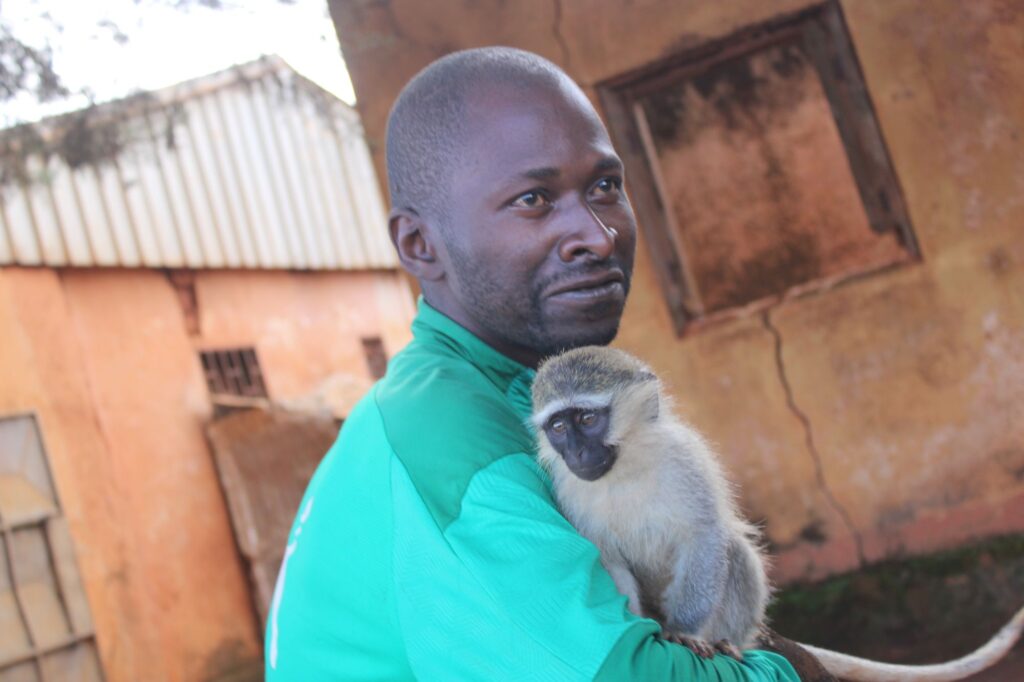
On a bright morning in Bangourain village in the Mount Mbam area, the Voice of Nature (VoNat) team, while carrying out conservation and climate actions, stumbled upon an unexpected sight, a young vervet monkey not in the forest where it is supposed to be but in the arm of a man with rope around the waist. The owner explained that he had captured it as a baby two years ago from the riparian forest of the neighbouring Koumbam village. What seemed like affection, feeding and raising the animal, was in fact a snapshot of a much larger conservation crisis.
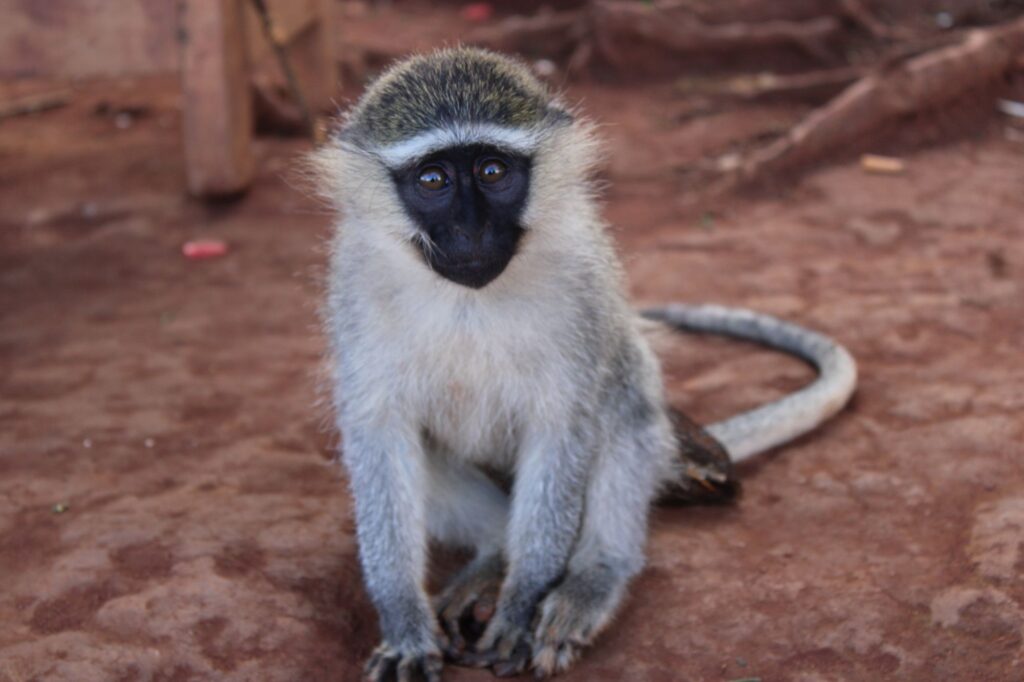
Mount Mbam, an 18,000-hectare Important Bird Area in Cameroon’s West Region, is a biodiversity treasure facing mounting pressures from farming, hunting, and habitat loss. During a baseline ecological study in February 2025, the VoNat conservation team made direct observations of three vervet monkeys (Chlorocebus sp.) in Bangourain village and spoted several other monkeys in a riparian forest in Koumbam village. Locals gave contradictory accounts regarding the presence of chimpanzees and other primates in the area. Such contradictions highlight how little is known about Mount Mbam’s primate populations and how urgently they need protection.
Capturing and keeping wild primates is not only cruel but also illegal. Cameroon’s Forestry and Wildlife Law No. 2024/008 of 24 July 2024 strictly prohibits the possession or trade of protected species without authorization. Yet the practice persists in rural areas, often driven by curiosity, cultural beliefs, or opportunism when hunters kill adults and leave infants behind. These actions fragment wild populations, introduce disease risks, and rob animals of their natural lives.
The vervet monkey’s story also reveals a broader threat, the loss of riparian forests. These lush corridors along rivers and streams are vital sanctuaries for wildlife movement and survival. When animals are removed and forests degraded, ecosystems unravel. VoNat’s Mount Mbam Landscape Restoration and Species Conservation Initiative seeks to change this through ecological research, forest restoration, and education. VoNat remains committed to conserving the primates and amphibians of the Mount Mbam area and other range habitats in Cameroon
By Ndimuh Bertrand Shancho