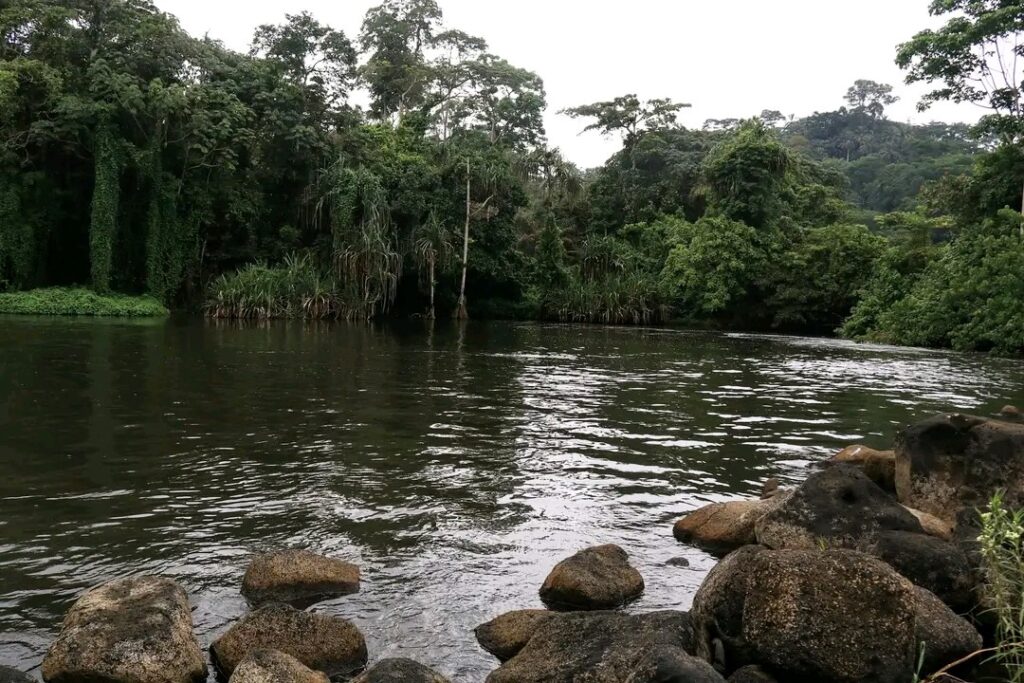
Deep within the fast-flowing forest rivers of Cameroon’s Littoral Region lives an extraordinary amphibian, the goliath frog (Conraua goliath), the largest frog species on Earth. Weighing up to six kilograms and stretching more than 30 centimeters long, it has long symbolized strength, abundance, and cultural identity for communities around Mount Nlonako and Mount Manengouba. Today, however, this remarkable species is quietly disappearing from the rivers into cooking fires.
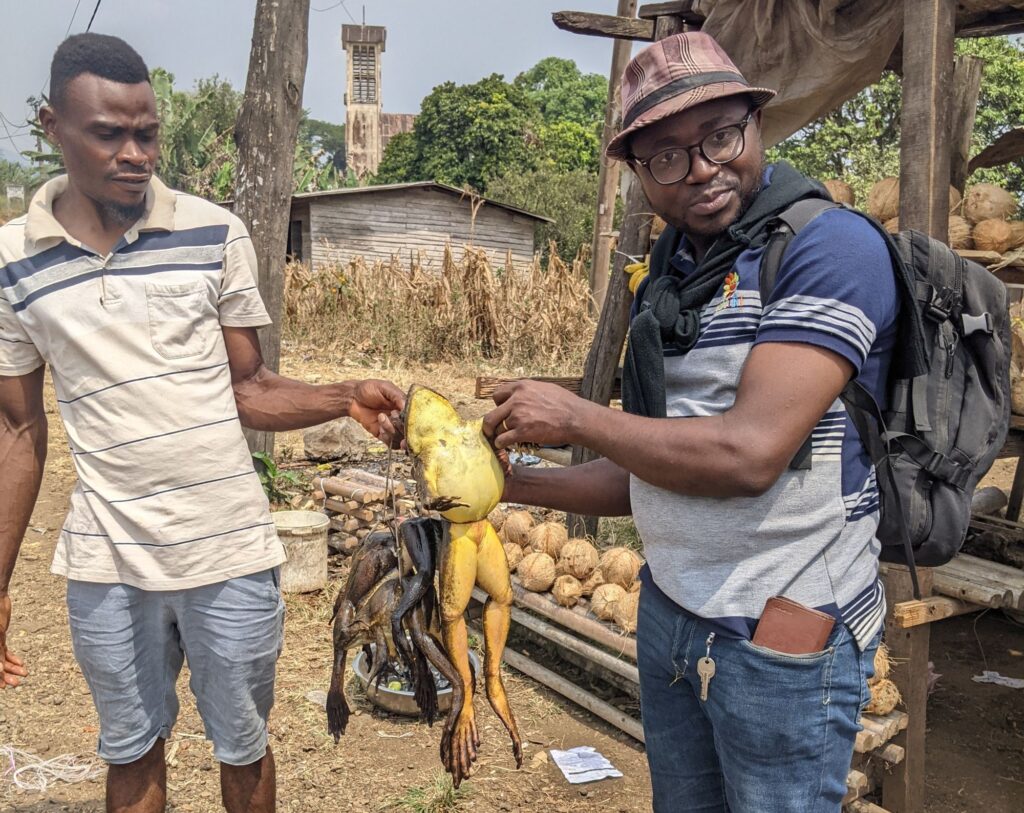
Across villages such as Ndoungue, Ngol, and Ekomntolo, elders recall a time when goliath frogs were once everywhere. “Before, we had goliath frogs almost everywhere. Today, you must go deep into the interior to find them,” said His Majesty Chief Ewane Clement of Ndoungue. Rivers that once teemed with life now fall increasingly silent, even where suitable habitats remain. Community members say sightings have become rare, and in some waterways, the species has vanished entirely.
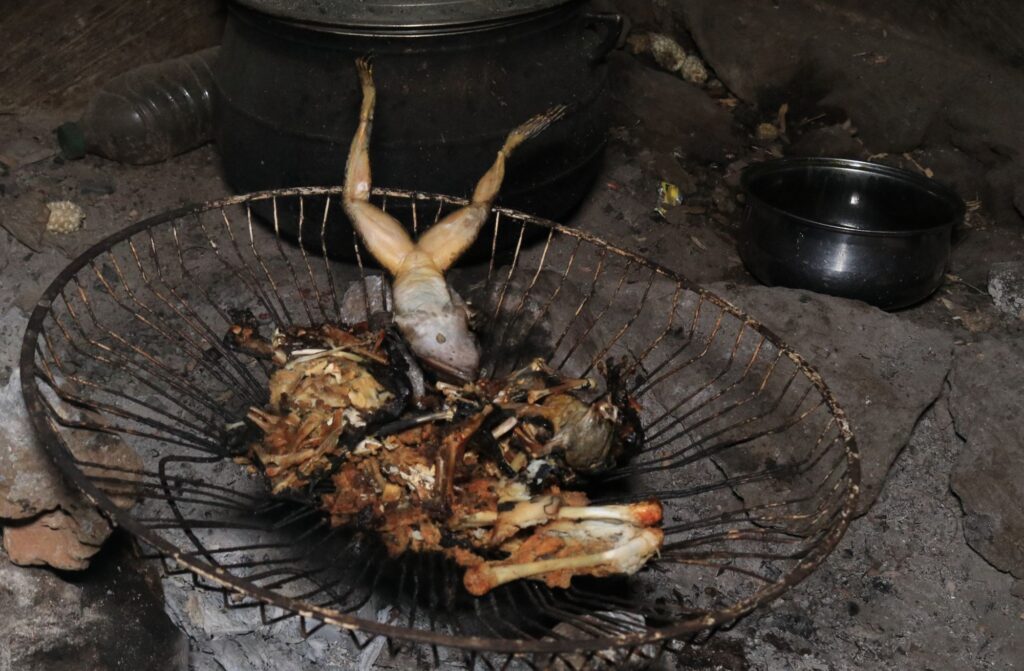
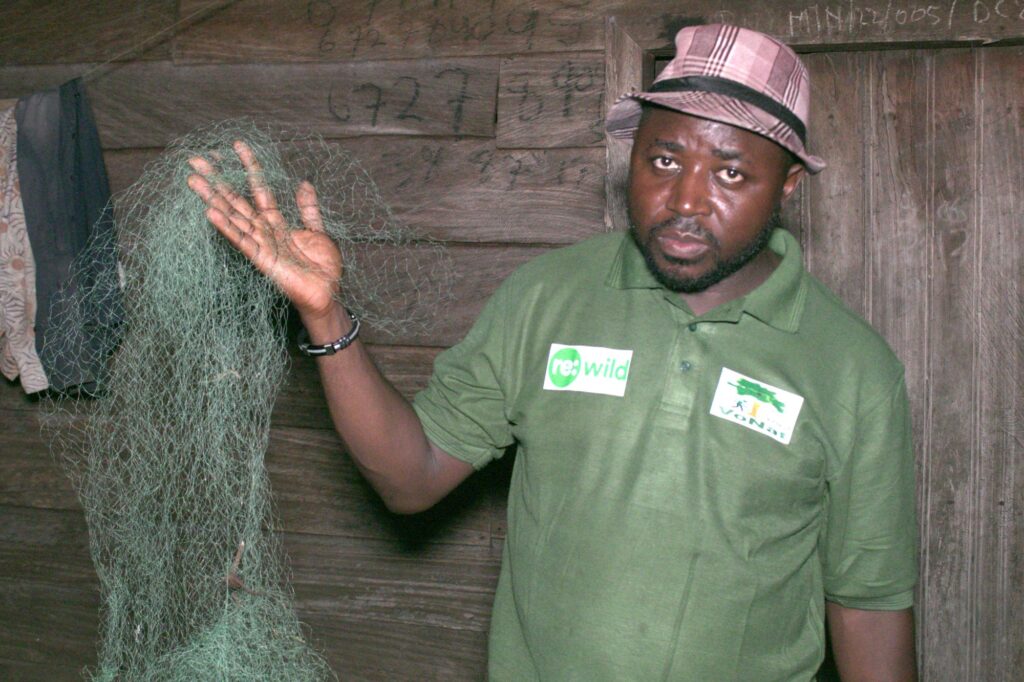
In Kola, a well-known trading point for goliath frogs, the realities of harvesting are visible in daily life. On a recent recent visit one Friday evening, three large frogs hunted the previous night were seen being smoked in the kitchen of local resident Emmanuel Njong. Nearby was a net used for hunting. Without prompting, he explained the technique: “We use this net to catch them after pointing a torchlight into their eyes to confuse them.”
For generations, harvesting followed strict cultural rules. Only certain individuals were permitted to hunt, and sacred rivers were protected, with frogs mainly consumed within households. Today, commercialization has transformed the practice. Hunters report that individual frogs now sell for between 3,000 and 20,000 FCFA, making them a valuable income source in communities facing economic hardship.
Despite growing commercial pressures, deep cultural knowledge remains tied to the species. Emmanuel described the frog’s importance in maternal health: “When my wife is pregnant, I prepare some of the biggest frogs for her to eat. It makes the child strong and healthy. If you see my set of twin (two boys), they are very strong because of this.” Another community member, Ngakam Gared, highlighted medicinal uses: “We use the thread or muscles of the frogs to stitch wounds. When used, it adapts like human skin and becomes part of your muscles.” These beliefs reflect the species’ long-standing role in local food systems, traditional medicine, and cultural identity.
Beyond hunting pressure, communities increasingly point to habitat degradation as a major threat. Deforestation along riverbanks, agricultural expansion, logging, and climate variability are altering the cool, shaded, oxygen-rich waters the frogs require. “The trees are gone, and the rivers are too exposed. You cannot find the frogs anymore because the water is no longer suitable,” one youth leader explained.
Amid these challenges, local conservation efforts are emerging. The Cameroonian organization Voice of Nature (VoNat), who has been in community education and sensitizatio outreach since 2021, is supporting communities to map threats, strengthen traditional conservation practices, and co-develop solutions such as community-managed protected rivers, frog farming initiatives, environmental education, and locally led monitoring systems. As one chief emphasized, “The frogs are part of our culture. We want our children and grandchildren to know them.”
The decline of the world’s largest frog reflects a complex convergence of pressures, commercialization, habitat destruction, climate change, and the erosion of cultural safeguards. Yet growing awareness and community-led action offer hope. Ultimately, saving the goliath frog will depend not only on protecting river habitats, but also on empowering the communities whose knowledge, livelihoods, and traditions remain deeply intertwined with its survival.