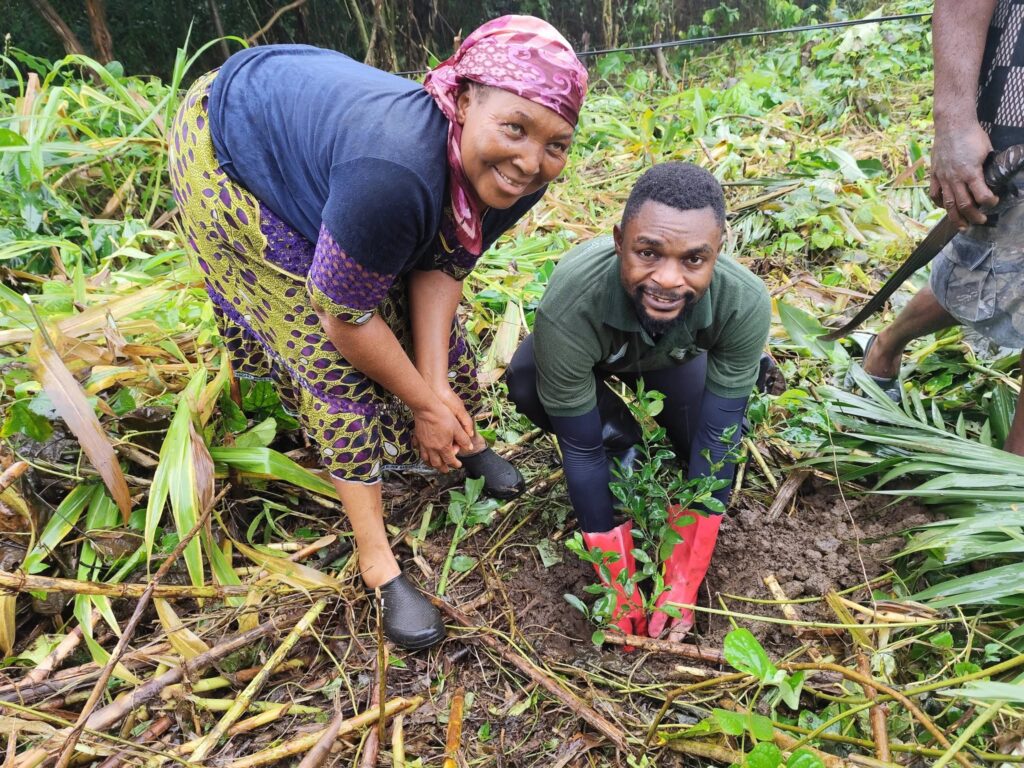
As the world marks World Elephant Day, Voice of Nature (VoNat) is turning the global call for elephant conservation into practical action for communities living alongside African Forest Elephants in the West Coast Cluster of the Mount Cameroon Landscape, Southwest Cameroon. VoNat has kick-started a pilot biofencing initiative designed to reduce elephant incursions and crop destruction while creating safer and more sustainable conditions for communities and elephants to coexist.
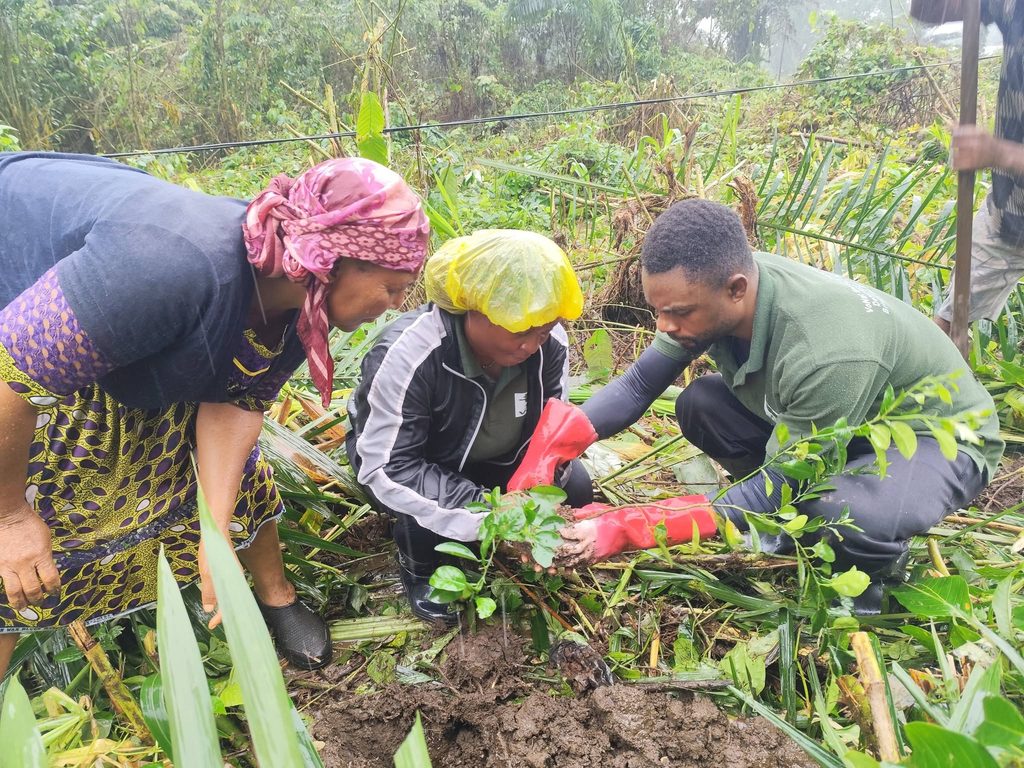
For farmers in Bakingili, the initiative comes after years of devastating elephant raids that have made farming increasingly difficult and, for some households, impossible.
Ma Lafone Lydia, a beneficiary farmer from Bakingili who has lived in the community for 20 years, says elephant raids have become particularly severe in recent years, forcing farmers to abandon their fields. “We have suffered from elephant raids for a long time now, and it has become worse over the past seven years. We have all abandoned our farms. Food is becoming scarce,” Ma Lafone said.
For her, the biofencing initiative offers renewed hope that farmers can eventually return to their fields without facing the same level of crop destruction.
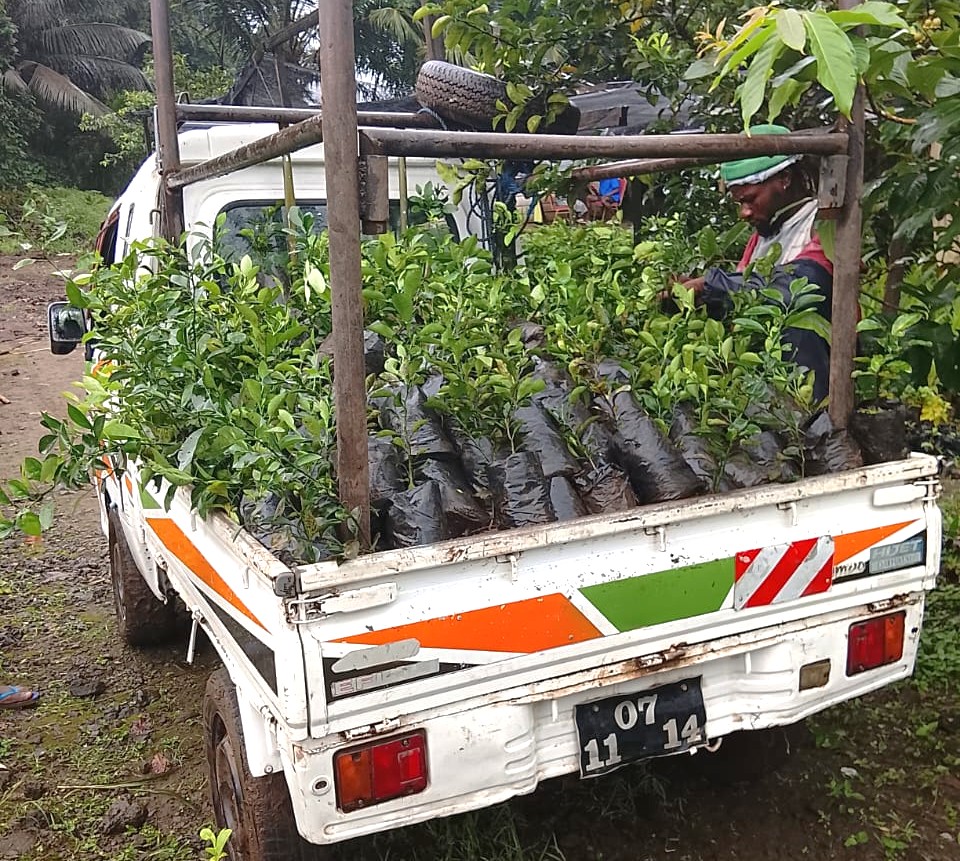
“I thank VoNat for the idea and for engaging us in planting these citrus trees. I am sure that, in a few years from now, they will serve as a barrier to prevent elephants from destroying our crops, and I will be able to farm here again. We will also harvest and sell fruits from these trees for our livelihoods,” she noted.
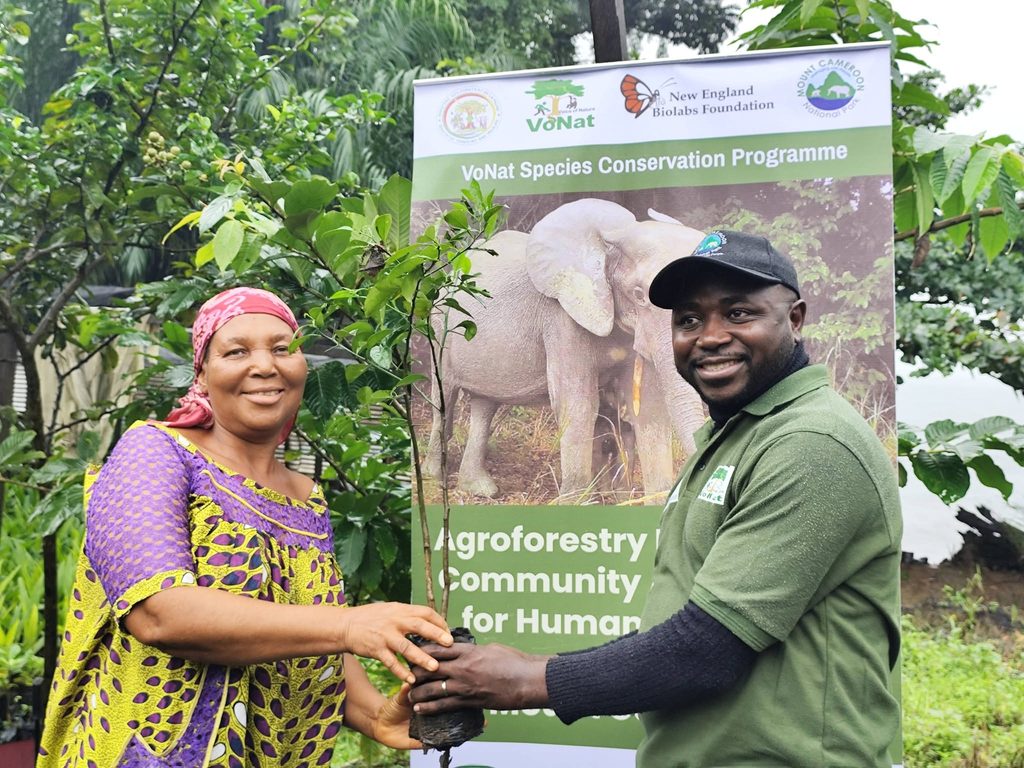
As part of the pilot, more than 1,000 trees were donated to participating farmers, accompanied by hands-on, experiential training on establishing and managing biofences.
The approach is intended to create living barriers around vulnerable farms using selected plant species while providing additional environmental and livelihood benefits. The initiative builds on VoNat’s broader work promoting nature-based solutions to human–elephant conflict, including agroforestry and community awareness.
Farmers are actively involved in establishing the biofences, helping ensure that the intervention responds to local conditions and priorities. The pilot will also provide an opportunity to monitor how effectively the planted barriers perform over time and document lessons that can inform future interventions.
The biofencing initiative is being implemented in collaboration with the Mount Cameroon National Park Service, a decentralized service of Cameroon’s Ministry of Forestry and Wildlife (MINFOF), with support from the New England Biolabs Foundation.