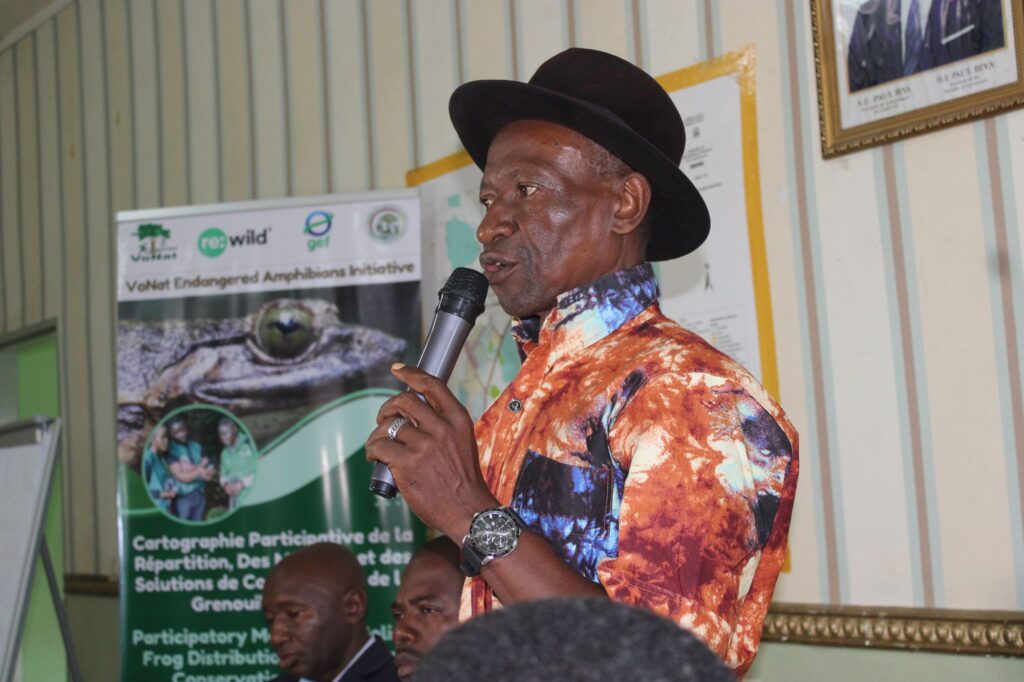
“We are very happy with your approach. Since Voice of Nature (VoNat) came here in 2021, you have educated our youth. Many of them are now teaching some of us about amphibians. VoNat involved our children, our hunters, and our elders in identifying threats to the Goliath frog and other amphibians, strategies that we believe will work. That is the approach we truly value,” said Njoume Ebehezert Theophile, Chief of Ntolo Village and Deputy Mayor of Ebone Council, during a workshop for the participatory mapping of conservation solutions for the Goliath frog.
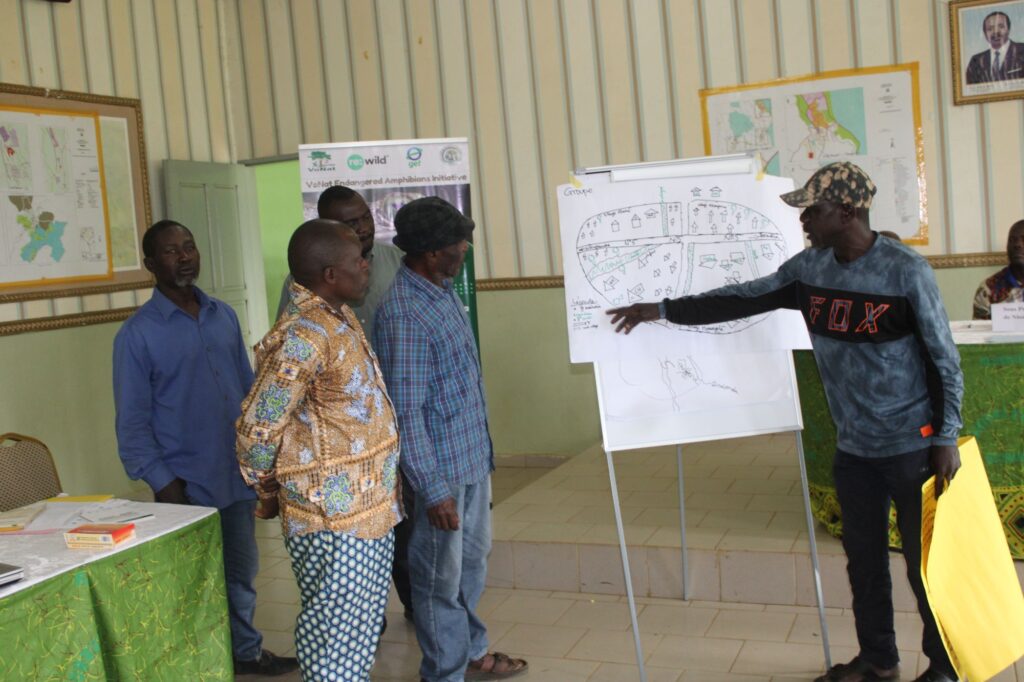
In Ntolo Village and many other villages in the Mount Nlonako area, rivers are more than water, they are home to the world’s largest frog, the Goliath frog ( Conraua goliath ), and central to local life. For years, some researchers and organizations came to these rivers and communities, gathered information, and left with little or no involvement of the people who live alongside these species. But Voice of Nature (VoNat) has done things differently, and local leaders have taken notice.
Earlier this year, with support from Re :wild and the Global Environment Facility (GEF), VoNat returned to train and engage community members in monitoring threats, collecting data using GPS devices and smartphones, and interpreting their findings. Then, in a participatory workshop at the Ebone Council Hall, nearly 50 leaders, frog hunters, youth, and community members from 15 villages came together to map local solutions for protecting the Goliath frog.
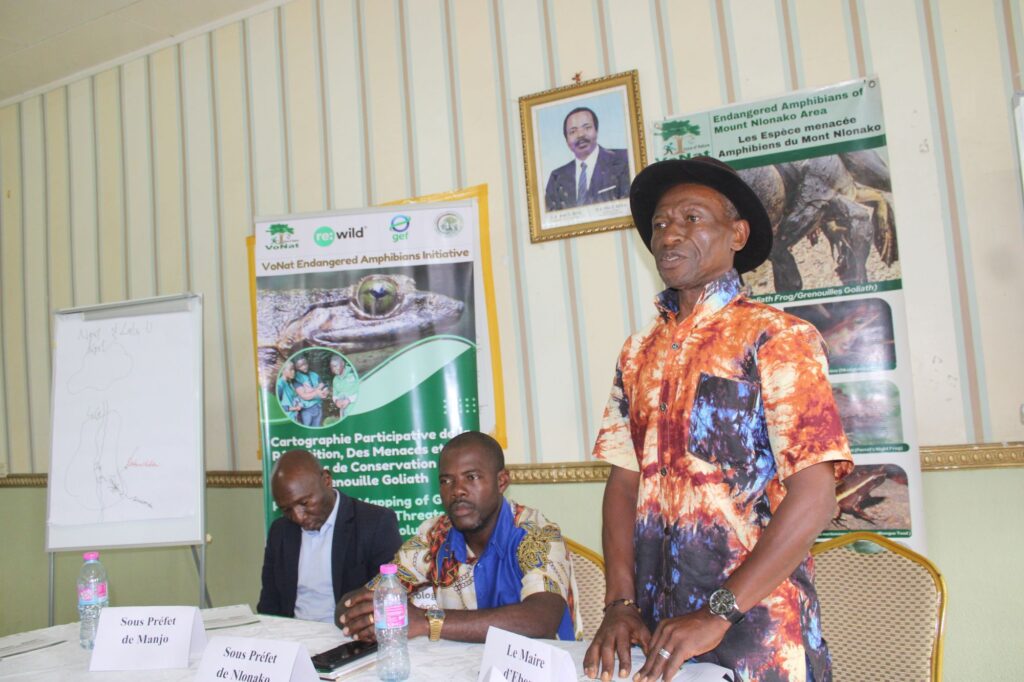
“What excites me most is that we are the ones giving solutions to our own challenges. Our voices matter. Our knowledge matters. And now, with VoNat’s guidance, we can turn our ideas into action to conserve these frogs and amphibians for the future,” Njoume said.
He added, “Our plea is simple. We hope VoNat will gain the partners and resources needed so that we can start implementing the solutions we identified together. Our communities are ready to work for our future.”
By placing people at the heart of biodiversity protection, VoNat is redefining success, rooted in local knowledge, shared responsibility, and hope for generations to come. Through education, collaboration, and empowerment, VoNat is proving that conservation works best when the communities living alongside the species are not just consulted, they lead the solutions.
By Ndimuh Bertrand Shancho