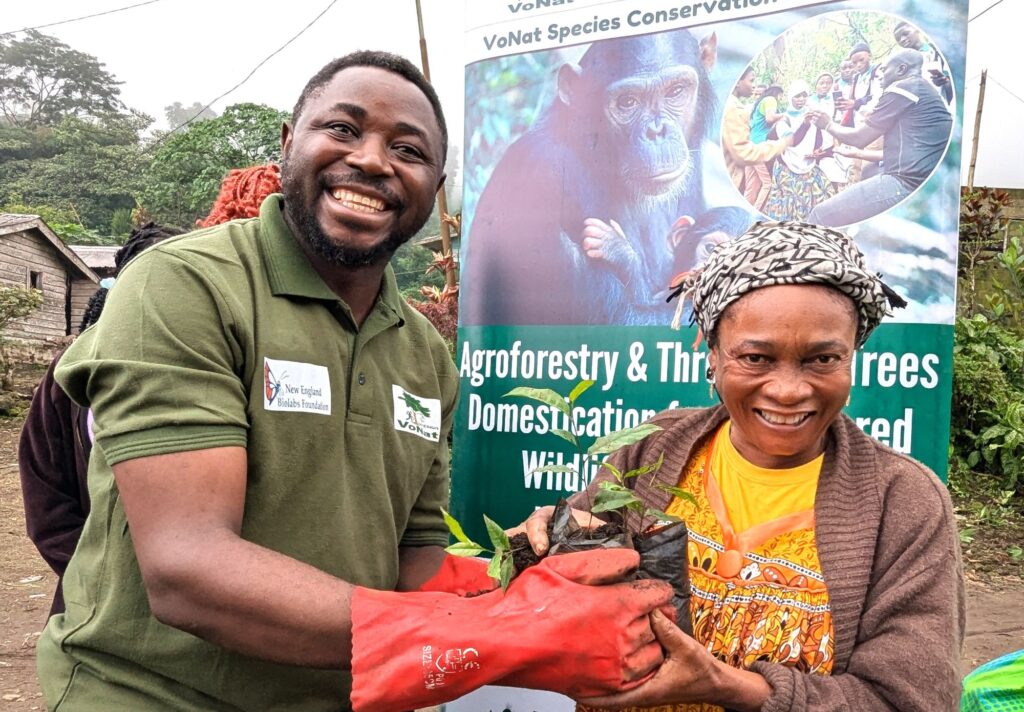
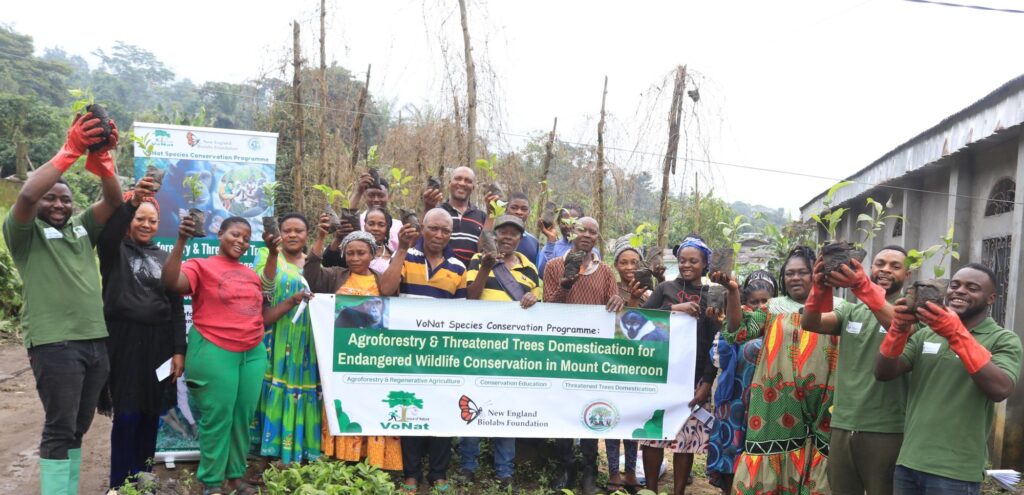
Voice of Nature (VoNat) has successfully concluded the third phase of its threatened tree domestication training and seedling distribution, reaching over fifty households in Bonakanda, Bova, and neighboring villages. The program, which took place recently, brought together farmers, women, youth groups, and community leaders for hands-on training on planting, care, and sustainable management of valuable tree species.
Participants received seedlings of Mahogany and Prunus africana, two ecologically, medicinally, and economically important species whose wild populations are rapidly declining due to overexploitation. By supporting local communities to cultivate these trees, VoNat is helping to reduce harvesting pressure within Mount Cameroon National Park while restoring their presence on farms and communal lands.
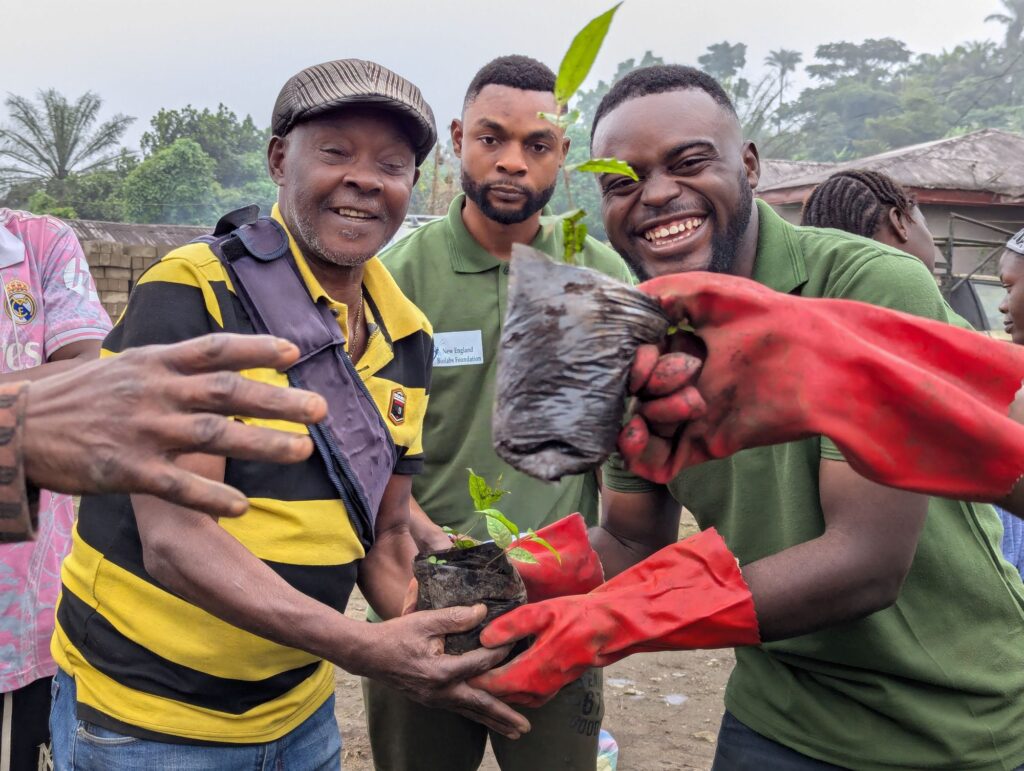
The initiative, supported by the New England Biolabs Foundation, builds on earlier training sessions and distributions in Bwitinngi, CEAC, and Bokova villages, fostering a growing network of community members actively engaged in conservation.
Community members expressed excitement and hope for the program’s long-term impact. Farmer Taba Grace explained that “Mahogany is now very scarce, overly harvested for timber and furniture to the point where we hardly see it around. If we can plant it in our homes and farms, it will help us not to go deep into the forests to harvest the ones where animals live. We are happy to receive these seedlings so that we can have our own to harvest. If I plant this Mahogany, in time my children can saw it as plank wood. It is a double advantage, since Mahogany is also medicinal. These trees are very important and will help us a lot.”
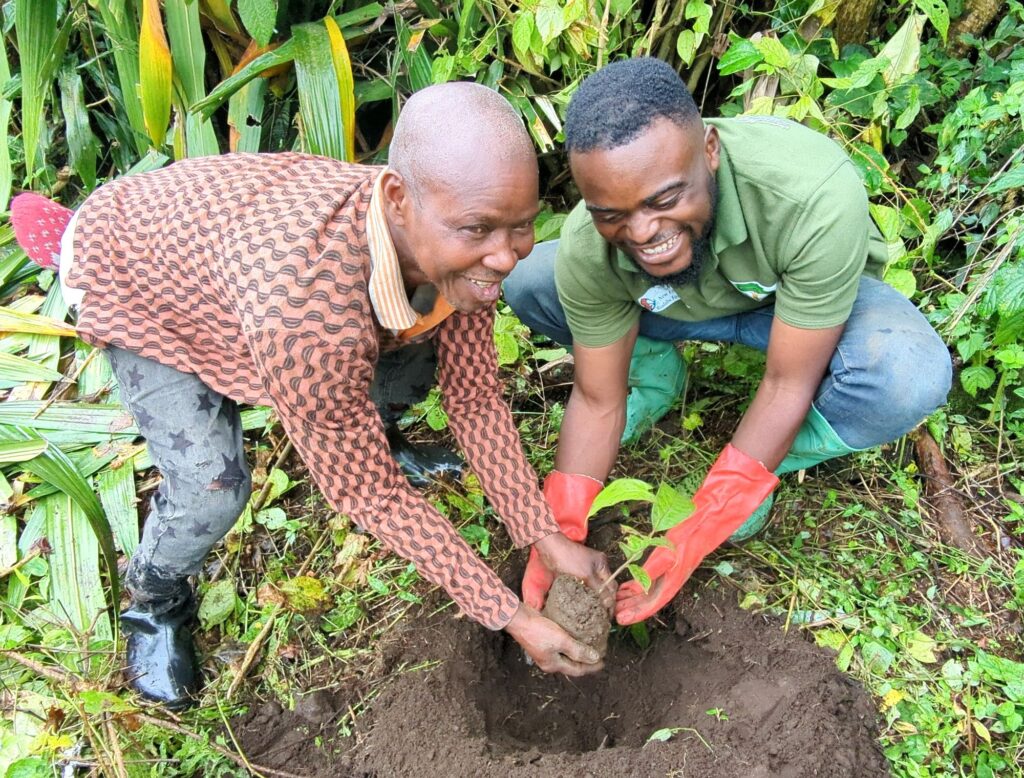
Similarly, community member Acha Evaristus said, “If the trees grow while I am still alive, like the Mahogany, I will saw timber from it. When my children want to build their houses, the timber will help them a lot. Even the branches will be used as firewood. We cannot thank VoNat enough for the trees and the regenerative agriculture training.”
Youth participant Andreas Mbua added, “This is my first time seeing some of these trees, and I have learned a lot about them, that some are medicinal and help boost agriculture. I am happy to have learned about them. It’s only my second time planting a tree, but I have never planted these types of trees before.”
Through this initiative, VoNat is not only supporting biodiversity restoration but also empowering communities to sustainably manage natural resources while passing on knowledge and stewardship to future generations. By blending practical training with direct resource support, the program demonstrates that conservation and community livelihoods can thrive hand in hand.